New publication: State on Stage

A new book from the Boekman Foundation may be of interest:

State on Stage: The impact of public policies on the performing arts in Europe

[from press release]
State on Stage tunes in on the relationship between governments and performing arts in European countries over the past fifteen years. In order to survive, performing arts organizations in Europe must adapt to ongoing changes in the artistic, commercial and political climate. Although maximizing market revenues has become business as usual for companies and venues, most still require substantial involvement from the government.

Governments, at their turn, expect more economic, educational or social tasks next to the artistic occupations before funding. This book shows how performing arts professionals manage to combine commercial entrepreneurship with the political skills needed to operate in a government environment.

State on stage offers both a pan-European overview and national portraits of fifteen EU member states, depicting a lively, dynamic performing arts scene, prospering in the new millennium. It also reveals what’s happening behind the scenes: oversupply, with thousands of performing artists unable to find proper jobs, seeking additional income elsewhere. Despite the generosity of governments at all levels, public money comes either in insufficient quantities, or is spent inefficiently.

This book describes the hopes and dreams that keep performing artists motivated under these difficult conditions. It contains inspiring literature, essential recommendations and new perspectives for everyone involved in this field: artists, managers, scholars, policy makers and politicians active in Europe and across its borders.

Céline + Bourdieu = awesome

celine.jpg

For further proof that you can apply Bourdieu’s theory of cultural capital to just about anything, check out Sam Anderson in New York Magazine reviewing rock writer Carl Wilson’s Let’s Talk About Love: A Journey to the End of Taste (published by Continuum, 2007):

Wilson’s real obsession here is not Céline but the thorny philosophical problem on which her reputation has been impaled: the nature of taste itself. What motivates aesthetic judgment? Is our love or hatred of “My Heart Will Go On” the result of a universal, disinterested instinct for beauty-assessment, as Kant would argue? Or is it something less exalted? Wilson tends to side with the French sociologist Pierre Bourdieu, who argues that taste is never disinterested: It’s a form of social currency, or “cultural capital,” that we use to stockpile prestige. Hating Céline is therefore not just an aesthetic choice, but an ethical one, a way to elevate yourself above her fans—who, according to market research, tend to be disproportionately poor adult women living in flyover states and shopping at big-box stores. (As Wilson puts it, “It’s hard to imagine an audience that could confer less cool on a musician.”)

Excellent. More extracts from Wilson’s book are available here.

Turn off the telly

ny_reading.jpg Caleb Crain in The New Yorker writes on recent studies that demonstrate a marked decline in reading among the American public… as usual, television gets much of the blame, but Crain makes some interesting points, drawing on Maryanne Wolf’s recent book Proust and the Squid (great title!) which examines the neurobiology and cultural evolution of reading, and a host of other researchers on literacy along the way:

The scholar Walter J. Ong once speculated that television and similar media are taking us into an era of “secondary orality,” akin to the primary orality that existed before the emergence of text… But there is research suggesting that secondary orality and literacy don’t mix. In a study published this year, experimenters varied the way that people took in a PowerPoint presentation about the country of Mali. Those who were allowed to read silently were more likely to agree with the statement “The presentation was interesting,” and those who read along with an audiovisual commentary were more likely to agree with the statement “I did not learn anything from this presentation.” The silent readers remembered more, too, a finding in line with a series of British studies in which people who read transcripts of television newscasts, political programs, advertisements, and science shows recalled more information than those who had watched the shows themselves.

Cain gives plenty of cause for worry if the decline in public reading continues:

… the N.E.A. reports that readers are more likely than non-readers to play sports, exercise, visit art museums, attend theatre, paint, go to music events, take photographs, and volunteer. Proficient readers are also more likely to vote. Perhaps readers venture so readily outside because what they experience in solitude gives them confidence. Perhaps reading is a prototype of independence. No matter how much one worships an author, Proust wrote, “all he can do is give us desires.” Reading somehow gives us the boldness to act on them. Such a habit might be quite dangerous for a democracy to lose.  (read the rest of the article)

Arts Council publishes new ‘Value of the Arts’ pamphlets

arts-council.jpgThe Arts Council has recently released two new additions to its ‘Value of the Arts’ pamphlet series: The Case for Elitism by Emer O’Kelly, and The Siren Alps by John McAuliffe. These commissioned essays prompt writers to respond to the results of the Council’s major survey The Public and the Arts (2006), which provided a fascinating look into the attitudes and behaviour of Irish people and the arts. However to date the tenor of most of these responses is journalistic or overtly polemic in tone, and these new arrivals are no exception… perhaps reflecting the need for more vigorous independent research in the sector to support, challenge, or qualify the findings of the study? Food for thought…

Classical, schmassical

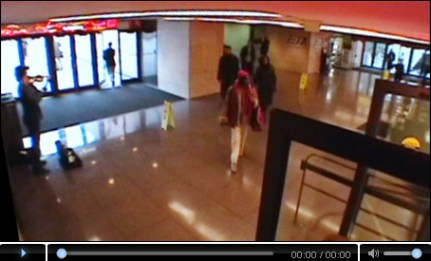
bell.jpgReactions to the Washington Post’s subway experiment with violinist Joshua Bell keep rolling in… Three new books recently reviewed in the New Republic– Who Needs Classical Music? Cultural Choice and Musical Value (J. Johnson), Classical Music, Why Bother? Hearing the World of Contemporary Culture Through a Composer’s Ears (J. Fineberg), Why Classical Music Still Matters (L. Kramer)– attempt to engage with the ‘crisis’ of classical music. Do they have a point?