Smithsonian reins in top earners

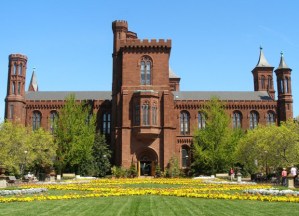
Big cuts have been announced to the salaries of the top-paid employees at the Smithsonian, in an effort to curb exponential growth in executives’ salary:

According to figures released recently after a request by The Associated Press, the chief financial officer for the Smithsonian Institution could have the biggest reduction. If the cuts planned for five years from now were made today, CFO Alice Maroni could lose as much as $120,000, or 41 percent of her base salary of $293,280. Others could have reductions ranging from $6,000 to more than $80,000 a year.

Nonprofit watchdogs and members of Congress have been questioning salaries at the Smithsonian since former Secretary Lawrence Small’s compensation grew to nearly $916,000 for 2007. Small resigned in March 2007 when it was revealed that he was also charging the Smithsonian for housekeeping and repairs to his home swimming pool, among other expenses.

[…]

Critics aren’t sure the Smithsonian has done enough. They question why [new Smithsonian secretary] Clough is paid more than the U.S. president, who earns $400,000 a year.

“One has to ask, what’s the logic of paying Clough $500,000 and then paying the others so much less?” said Pablo Eisenberg, a senior fellow at Georgetown University’s Public Policy Institute who studies nonprofit leadership. “I don’t think that makes for very good morale among staff.”

(read the rest of the article)

Yikes. Somehow I think this is one financial model Irish arts institutions won’t be following…

Thanks to Kevin O’Dwyer for passing this news article along.
IMMA’s collections in crisis

Part of the Tain tapestry series by Louis le Brocquy, one of the works currently suffering from poor storage conditions

A Tain tapestry by Louis le Brocquy, one of the IMMA works suffering from poor storage conditions

IMMA’s storage crisis made the front page of the Irish Times over the weekend, as a report obtained by the IT through Freedom of Information detailed the extent of damage that’s been done to the permanent collection due to inadequate storage facilities. This is the second revelation in recent months of serious mismanagement of national collections (following a damning audit of the National Museum’s collections by the Office of the Comptroller and Auditor General). The five-year-old IMMA report, authored by collections curator Catherine Marshall, details buckling of artworks, prints adhering to glass, and bloom appearing on metal sculptures– such damage making the works in storage ‘dangerous to handle’ unless absolutely necessary.

A second piece in the IT continued the IMMA story further:

Imma’s own on-site stores at its home at the Royal Hospital Kilmainham (RHK) were crammed with artworks, constituting a serious hazard as they could not be evacuated in the event of a fire and had no proper environmental controls to protect fragile works of art. With well over 1,000 works in its permanent collection by then, the vast bulk was being housed in “temporary” and “interim” warehouses and stores sourced off-site by the Office of Public Works (OPW), none of which were really suitable for storing art.

So critical had the storage situation become that Imma was forced to store works in a shipping container in the car park. The use of the shipping container was described as an emergency solution. But the “emergency” lasted four years. In September 2007, Imma’s director Enrique Juncosa wrote to Sean Benton, the chair of the OPW, again highlighting its storage problems.

Continue reading

Fionnuala Croke appointed chief keeper and curator at the National Gallery

On Saturday the National Gallery of Ireland announced that Fionnaula Croke– a twenty year veteran at the Gallery– would be taking over the reins from Sergio Benedetti as head curator:

Ms Croke, who takes up her post this month, will have overall responsibility for managing the permanent collection and exhibitions at the gallery.

She told The Irish Times her main priority would be to enhance the permanent collection through acquisitions, research and the publication of gallery catalogues. The National Gallery gets €3 million a year from the Government to acquire new works.

The gallery is also planning a €45 million refurbishment of its older buildings and the construction of a new wing, which will be used to provide further gallery space.

From Churchtown in Dublin, Ms Croke joined the gallery in 1987 as a research fellow, and subsequently became curator of French paintings.

In the 1990s, she was also responsible for administering exhibitions and in 2000 was appointed head of exhibitions in anticipation of the opening of the Millennium wing of the gallery.

Arts 2 Business

center-curatorial.jpg

The New York Times today reviewed the new Center for Curatorial Leadership in New York, a fellowship programme affiliated with Columbia Business School that offers advanced business training to museum curators. The programme seeks to bridge the gap between curators and director positions they may aspire to, responding to the fact that

… candidates for the top jobs need not only the skills of an art historian, but also those of a chief executive, investment banker, motivational speaker, political infighter and veteran diplomat.

The Center also seeks to ensure that museums will continue to be run by those from a curatorial (and not simply business) background, by equipping curators with the skills of arts managers:

They learned about endowment management and conflict resolution. They heard from executive-search specialists, the kind who could someday help determine the fates of the curators in the room. And they listened to an expert in the booming business of museum marketing — a field many museum leaders view with suspicion — talk about focus groups, audience expectations and branding (“the B word,” as the expert, Arthur Cohen, delicately described it).

The programme’s aimed at experienced curators (8+ years of experience required to apply), as the current fellow list demonstrates. It’s interesting how the training of museum curators has changed little over the past few decades, and remains solidly the domain of the scholar– quite different from the expectations of orchestra and theatre managers, where artform experience may not command the pole position. The question to what extent this type of training will trickle down the curator food-chain is an interesting one…

Minister Brennan seeks late nights out

dublin_night.jpg

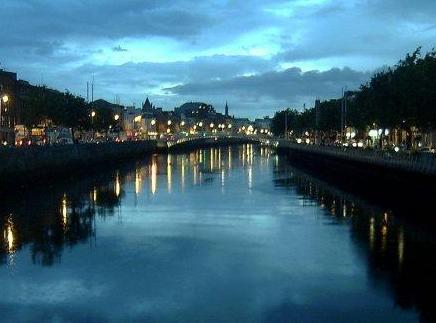
Speaking at the launch of IMMA’s new programme last Thursday (as reported in the Irish Times), Minister for the Arts Séamus Brennan called on Irish museums to extend their opening hours, in order to enhance access and respond to visitor demand:

“We need to get away from the traditional and often rigid nine-to-five opening times and build in a degree of flexibility that reflects our changed lifestyles and use of leisure time.”

Certainly nothing new here to anyone who’s ever tried to navigate the bizarre opening policies of many of the national institutions, and early closing hours of many cultural resources throughout the country– something Culture Night in Dublin has tried to rectify, with an amazing public response and success. The new Science Gallery may be on to something here, with opening hours until 8.30 during its upcoming festival.

If you open, they will come, seems to be the message…