Get in formation: Irish arts & heritage rising

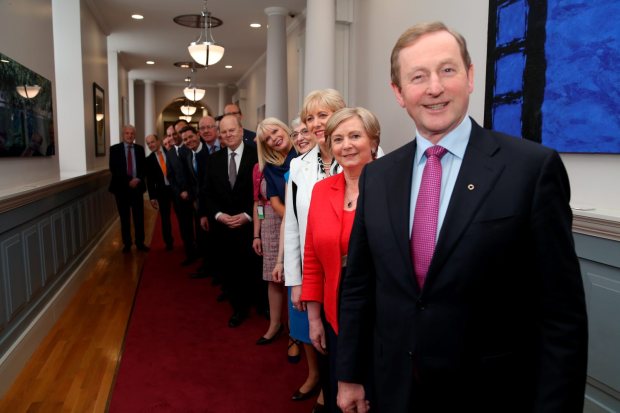
taoiseach_formation.jpg

… and I don’t mean this formation.


Media & Public Response Round-up: (last updated 23/5/16)

Blogsphere:

On radio:

In the press:

On Twitter:

  • Follow #ArtsDeptNow for ongoing responses and a rolling list of those who’ve signed the petition
  • Minister Humphreys also had a short reply (11/5/16)

National Campaign for the Arts:

Party statements:

Elsewhere:


What a difference a week (or so) makes: the announcement on Friday 6 May of the re-shuffled and re-christened Department of Regional Development, Rural Affairs, Arts and the Gaeltacht has prompted an incredible public response (especially across social media using the hashtag #artsdeptnow) decrying the continued failure of government to adequately recognise and fund Irish arts and heritage.

The petition started by John O’Brien to reinstate a dedicated Minister for the Arts and raise the level of arts & heritage funding closer to the 0.6% EU average is at nearly 10,000 signatures (go SIGN IT now if you haven’t already!) At the bottom of this post I’ve included a round-up of some of the media and other responses over the past week (please respond in the comments if I’ve missed anything, and I will add to the list).

So the big question is: what now?

The petition’s a great start: it is a very visible and tangible demonstration of support for a dedicated arts ministry, that’s extending beyond the arts community itself to the wider public (whose support we really need!)

Other suggestions voiced across social and other media have included an organised national day of direct action; a national symposium/event highlighting the public value of the arts and heritage; and a coordinated event to present the petition to government once it hits the 10k mark.

From my perspective, it’s key to acknowledge the groundwork laid by the National Campaign for the Arts over the past years (and its achievements), and to reactivate that campaign. Most essentially: as Loughlin Deegan notes, the NCFA is made up of individuals willing to give time, attention, and also money to support its efforts – and we need more of all of that! It’s entirely run on the energy and activism of volunteers, and I’d love to see this recent outpouring of reactions to the demotion of the arts (yet again!) coalesce in a re-organisation and re-invigoration of our NCFA.

This isn’t just lip service: here’s what I’m personally willing to do:

  • run another fundraiser for the NCFA (our last pub quiz in 2013 raised over €3,000! Time for a rematch??)
  • work with the Irish Museums Association to widely disseminate the results of our Irish Museums Survey (which I’m writing up at the minute!) Knowledge is power: this is going to give us important information about the state of play in the museum and heritage sector that will help inform policy and further action in support of Irish museums.
  • assist in organising and/or publicising any follow-on campaign event

Beyond signing the petition: what can or will you do to keep up the momentum? Time to get in formation, folks.


A New Irish Ministry for the Arts (Or, Through a Hedge, Backwards)

beyonce-tears

upon hearing the cabinet reshuffle news

(*update 11/5/16: thanks to RTE Arena for having me on air yesterday to speak about this: piece begins at 4:00. Please consider signing the petition to reconfigure a new arts ministry started by John O’Brien)

Like many in this country, I’ve been patiently waiting for our warring political factions to hammer out some kind of resolution to the election impasse. Listening to the radio, getting my young kids ready for school in the morning rush, stopping for the occasional eyeroll as the merits of this-or-that coalition is debated… waiting.

Finally on Friday, the new Cabinet was announced. Some familiar faces, a few surprises, and then the biggest shock of all: the newly configured Department of Regional Development, Rural Affairs, Arts and the Gaeltacht. Cue my disbelief.

In what other European country would such a combination be acceptable, or even logical? Have the arts (and heritage, which seems to have fallen off a cliff) really fallen so low in government estimation?

Call me an optimist: in the triumph of hope over experience, I’ve perpetually believed that as the economy improved, our government might turn again to nurturing the cultural life that has actually sustained us during these last few, depressing years of recession. That it might recognise how, in spite of resources slashed and professional expertise often discredited, folks working in our cultural sector have continued doing what they love and believe in, often at great personal expense (both in terms of morale, and financially). Playwrights and novelists haven’t stopped writing; actors and musicians have persisted in performing; artists continue to create work that makes us think and challenges us to look at the world anew. Museum workers, even in their dwindling numbers, welcome school groups across the country; volunteers keep heritage sites open and welcome visitors with a cup of tea; our national collections and archives continue to paste over the cracks, and keep institutions functioning in the face of disappearing funding, threats to their independence and the hiring moratorium.

What about the near-incessant stream of 1916 centenary events? Who do the government think have been producing the talks, performances, exhibitions, public events that have attracted thousands over the past few months, with many more in planning? I’m of the personal view that the commemorations have been incredibly rich, dramatically expanding public narratives that were previously frozen by polarised political ideologies. We can be proud of our centenary year to date – but this is because of the creatives (artists, archivists, academics, etc) and the willing public who have made it so.

I’m flabbergasted, frankly. Some will say the cabinet reshuffle doesn’t matter: power has, and always will, essentially rest with the senior civil servants who actually run the Department of Arts & Whatever Else You’re Having. But I happen to think it does matter. Do we live in a society that believes in the integrity and value of our cultural life? Why haven’t we been given a government department and minister that signal a central (not peripheral) willingness to cultivate and protect our much-lauded reputation as a small, global, cultural powerhouse? All too often it feels that Ireland’s cultural richness has not emerged because of government support: it’s happened in spite of it.

What does this active disregard feel like on the ground? Let’s just look at one slice of this – Irish museums –as I happen to be finishing writing up the results of the Irish Museums Survey (to be published in the next month). Funded by the Irish Research Council and undertaken by the Irish Museums Association and UCD, it’s the first time in a decade any statistics have been collected on the museum sector (these aren’t officially collected, by the way). The more sophisticated analysis will come later, but here are just a few insights into what eight years of budget cuts have achieved (some from the survey, and others from my own experience):

  • In 2015, 300,000 visited the Natural History Museum of Ireland (ah, the Dead Zoo! Beloved of generations everywhere, and annually in the top ten most visited free attractions in Ireland). It had no dedicated education staff, and only 2 curators (one of whom is the Director).
  • 40% of the budget of the National Museum of Ireland system has been slashed since 2008. Let that figure sink in.
  • Thousands of tickets have already been pre-booked for the (free) exhibition of Leonardo da Vinci drawings at the National Gallery of Ireland, which opened 5 days ago. Yet a large proportion of the gallery has been closed since 2011: despite government declarations it would reopen in 2015, and then 2016, it’s now slated for spring 2017 (maybe?) Apart from the loss of public access to national collections, this also means we’ve had a talented museum director (as we are lucky to have in Sean Rainbird) compelled to manage a mostly-closed museum.
  • As part of the Museum Survey we asked 100+ museums across the country (small and large; urban and rural) what impact budget changes have made over the past five years. Here is just a small sample of the responses (more to come!):
    • Our heating was removed
    • Reception staff annual leave has to be covered by curatorial staff
    • A reduction in staff numbers from 28 to 5
    • Difficulty in paying electricity and public liability
    • A 70% drop in our programming budget
    • Unable to repair damaged roof and flood damage

Such accounts could be multiplied many times over, if extended to the visual, performing, and literary arts. And yet – on 28 March at the conclusion of RTE’s acclaimed broadcast Centenary, President Michael D Higgins paid tribute to the centrality of Irish culture as inspiring the new State:

From that foundation, that cultural and literary awakening, Irish artists known and appreciated throughout the world have emerged, and continue to emerge. Tonight we celebrate not only our rich cultural heritage, but also its contemporary expression, our new imaginings, and the many creative ways in which we are telling our stories. For ours is a story still in the making.

This year, as we celebrate this important centenary and reflect on what we have achieved, we are committing ourselves to continuing the journey of imagination, committing ourselves to sustain the artistic work that will form the next chapter of our story.

A month later, and we’ve been presented with the new Department of RDRAAG to carry this ‘national story’ forward. Perhaps no acronym has ever been more fitting.


Just published: Vol. 3 of Irish Journal of Arts Management & Cultural Policy

cover image_2015

I’m delighted to announce we’ve just published the latest volume of the Irish Journal of Arts Management and Cultural Policy. It’s a special issue featuring the edited proceedings of the 2014 summer conference on ‘Mapping an Altered Landscape: Cultural Policy and Management in Ireland‘. Guest edited by Dr Niamh NicGhabhann from University of Limerick, it features contributions from a range of speakers on the day, who offer candid and contemporary views of the cultural sector and public finance, the role of local authorities, policy, the working lives of artists, and a range of other topics. The journal also features introductory essays by Niamh and conference organisers Pat Cooke and Kerry McCall, as well as a postscript by former Minister for Education Ruari Quinn.

You can download the entire issue here, or visit the www.culturalpolicy.ie to download individual contributions by:

  • Gerry Godley (Principal & Managing Director, Leeds College of Music)
  • Clare Duignan (Independent Director & Business Advisor)
  • Peter Hynes (Chief Executive, Mayo County Council)
  • Alan Counihan (Artist)
  • Mary Carty (Entrepreneur, Arts Consultant, Author)
  • Conor Newman (Chair, Heritage Council)
  • Ruari Quinn (Minister for Education and Skills, 2011-14)


Bumper crop of arts jobs & other news

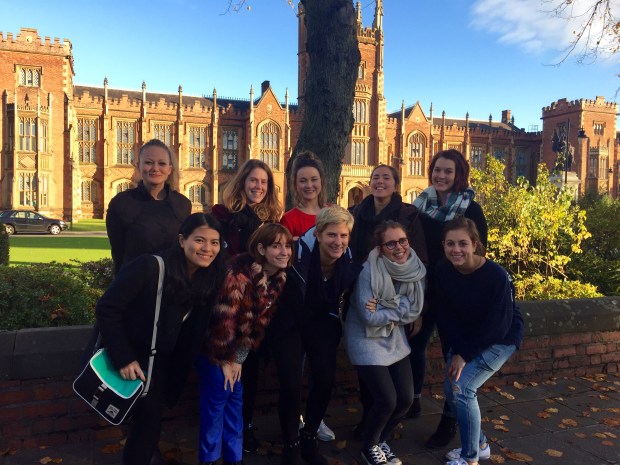
Some of our MA in Arts Management & Cultural Policy students from UCD attending the Irish Museums Association event in Belfast

Some of our MA in Arts Management & Cultural Policy students from UCD, attending the Irish Museums Association event in Belfast

Just finished another update to the jobs page – whoa mama, there’s a lot on offer at the moment! Happy hunting…

A few other bits and pieces from this week:

Thanks to everyone who came along to the Irish Museums Association event in Belfast at the weekend, and especially to our wonderful speakers sharing their experience of creative collaborations with museums (slides will be posted soon!) Our next big event is the annual lecture on 11 November at the NGI, where we will welcome Sir Christopher Frayling, former Chair of the Arts Council England and the Design Council (UK), former trustee of the V&A, governor of the British Film Institute — you won’t want to miss it! Tickets are free but *must* be booked in advance (and our lectures usually book out!)

The Arts Council of Ireland recently announced its 10-year strategy Making Great Art Work – Leading the development of the arts in Ireland — and are inviting responses to the strategy, as well as hosting a series of fora nationwide from late October – November (registration required).

Arts Audiences’ Focus on Audiences – Digital Day 2015 event will take place on 17 December at Dublin Castle — an essential event if you’ve an interest in development, marketing, etc!

I’m intrigued by the Light Moves festival in Limerick (18-22nd November) that explores screendance and dance on film… such an unusual and engaging programme.

Limerick seems to be quite the busy place next month: on 19 November the Hunt Museum will host a symposium on Digital History, focusing on interactivity in heritage sites and museums.

The Abbey Theatre launched details of its 2016 programme yesterday, Waking the Nation – it looks to be a strong programme, although protests on twitter about about the lack of female playwrights seem justified… something to discuss perhaps in the new Peacock cafe just opened there too…

On 5 November we’re very pleased here at UCD to host a performance by Artist-in-Residence Dominic Thorpe, entitled Disjunction, based on work he’s been doing over the past year as part of UCD’s highly successful artist-in-res programme.

I’m delighted to be involved in the lecture series accompanying the National Gallery of Ireland’s upcoming exhibition The Pathos of Distance, a collaboration with the artist Sarah Pierce, exploring images of Irish immigration and diaspora. Lots of great info and images are now appearing on the NGI’s blog to accompany the exhibition which opens in December…

Finally — if you’re interested in arts fundraising and development — hope you’re following Jeremy Hatch (The Artful Fundraiser) — I just love his candid, funny (and highly knowledgeable!) blog posts on the ins and outs of arts development…

Arts news round-up: 19 October 2015

Screen Shot 2015-10-19 at 12.22.53

A few bits and pieces for your Monday…

Last call! We’ve more than 70 signed up for The Creative Museum: Extending Participation Through Collaboration’ this Friday/Saturday at Queen’s University Belfast; a few extra tickets have been released through the link above, and there are some additional seats on the (free!) Dublin-Belfast bus taking folks up & returning on Saturday. It’s going to be a great day — many thanks to the Department of Arts, Heritage and the Gaeltacht for their sponsorship of this event.

Always love seeing arts organisations venturing into new territory, and the Royal Hibernian Academy’s been leading the way on this one: their Blue Moon Lost Wednesdays events have been fab mixes of music, food and art — and their inaugural Interlude festival this weekend looks promising, with a live music room, club space, cabaret cinema, cocktail club, craft beer bar, vinyl room and pop-up restaurant!

Congratulations to my colleagues Victoria Durrer (QUB) and Kerry McCall (IADT) on the imminent launch of the Cultural Policy Research Observatory Ireland, a new network and resource for Irish academics (north and south) engaged in cultural policy research, across disciplines. Seed funded by the Irish Research Council, its inaugural event (by invitation) is taking place this Thursday, 22 October at QUB on the subject of The Production of Our Contemporary Livelihood. More great things are to come!

The details of Budget 2016 were announced last week; however the rather cheerful press release from the Department was quickly countered with more negative assessments from the National Campaign for the Arts and Theatre Forum. Both correctly highlight that most of the significant new funding allocations are devoted only to impending commemorations: core funding is only being increased by €4.5 million, a very disappointing sum given the substantial cuts to the arts & culture budgets since 2008. The Department has further indicated a ‘boost in funding for the National Cultural Institutions and the Arts Council’, but few details of what this constitutes are yet available (excepting a €2.5 million increase for the AC, but the wording suggests this may be a one-off). There’s no two ways about it: funding for the centenary is eclipsing investment into core arts and cultural funding. This is very problematic, especially for any and all activity falling outside that narrow categorization. I’m feeling a 2016 hangover coming on already…

Applications for the 2016 Government of Ireland postdoctoral scholarships are now being accepted. This is the primary means by which arts & humanities postdoc work is funded at Irish universities; if you’ve a PhD and would like to come speak with us about postdoc opportunities, feel free to get in touch!

Along with colleagues at Maynooth University and the International Network of Irish Famine Studies, I’m co-organising a conference on The Great Famine and its Impacts: Visual and Material Culture (14-16 March). Our call for papers has just been announced; we’ll be producing an edited volume, and have planned several special events in conjunction with the conference, so do consider sending in an abstract if you work in this field…

On 29 October I’ll be participating in the symposium Talking About Perpetrators, a cross-disciplinary event taking place in Dublin Castle and co-organised by College of Arts & Humanities Artist-in-Residence Dominic Thorpe, and Dr Emilie Pine from UCD School of English, Drama & Film. Tickets are very limited, so do book asap if you wish to attend!