Weekly round-up: 11 March 2011

There was an election, don’t ya know:

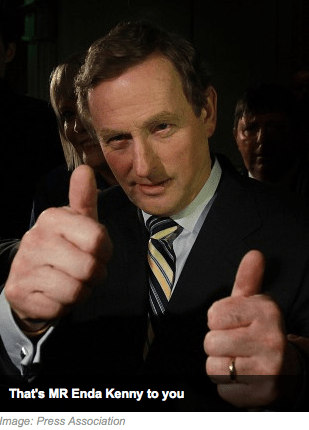
  • Fine Gael swept the boards in a resounding victory (although the NY Times couldn’t quite figure out the gender of poor new Taoiseach Enda Kenny) — but pertinent to we arts folks was the announcement of the new Cabinet: Jimmy Deenihan (author of Fine Gael’s pre-election arts policy) was duly named Minister of the re-formatted Department of Arts, Heritage and Gaeltacht Affairs. This announcement confirmed election promises to keep the arts at the Cabinet table, but the reconfiguration of the various portfolios was more than a little perplexing (Leo Varadkar was named Minister for Transport, Tourism & Sport). Is this new nomenclature a signal that ‘culture’ will be reinterpreted more narrowly as ‘arts’? What are the consequences of losing the economic clout of tourism (and to a lesser degree sport) and becoming a warmer, fuzzier, and possibly easily sidelined department? Given that the budget of the Heritage Council was recently slashed 47% (following a reduction of 30% last year), this new configuration is worryingly low on punching power.
  • The National Campaign for the Arts provided a handy link to the two arts/culture-related pages of the new Fine Gael/Labour programme for government (click here for pdf): main points are the expansion of Culture Night to 2 nights/year [ok, achievable enough], developing 1916 centenary plan for 2016 [historians here at UCD are already rubbing their hands with glee], promoting geneaological tourism & stimulating diaspora tourism [hmm, is this really a growth area? The digitisation of census records has already had a negative impact on geneaological tourism; this aim feels very 1997], getting Local Authorities to combine arts officers’ roles [rather than providing funding for new/vacated positions], and using empty NAMA buildings for ‘local facilities for arts and culture’ [one thing we’re certainly NOT short of in this country is arts facilities, Mr Minister!]. Perhaps most significant was the statement that ‘Responsibility for policy-making will revert to the Department, while agencies will be accountable for implementing policy, assessing outcomes and value for money’ — surely the Department has had little to do with actual direct cultural policy-making in recent years, asserting its interests instead through funding streams and the occasional direct cultural initiative. I’m most interested to see how this might play out in practice.
  • Music Network launched its plans for Love:Live Music National Music Day on April 8th. They’re soliciting new events to be added to the event listings on the site, and promoting a great range of offerings — more will definitely follow on this come April!
  • Most recent Dublin Contemporary news– Art in America featured a small piece on the troubled DC, claiming dismissed curator Thompson’s departure was due to a failure ‘to submit satisfactory plans’. An odd quote from the new curator Christian Viveros-Fauné: ‘”Now is not a good time for art that rubs people the wrong way,” the curator says, but he and Castro, who have collaborated previously, want to be thoughtfully provocative, or, thoughtfully provocative without being aggressive or offensive.’ Hm, this hardly sounds like a recipe for a truly ‘provocative’ programme? Still, there is much goodwill behind the initiative — even if an article in last week’s Sunday Times (no online free version, alas!) pointed out that the very established Lyon Biennale (curated this year by Victoria Noorthorn) begins about a week after the DC and has the exact same title. D’oh!
  • A piece in the Irish Times on Wednesday reported from the EU Culture in Motion conference in Brussels, noting the low uptake of EU Culture funding by Irish organisations (a subject that’s forming the thesis of one of our current MA students). Difficulties forming the partnerships required by EU funding schemes were highlighted, but the picture is definitely more complex than that (on a side note of weirdness, the article’s author seemed not to know who Jordi Savall is! )
  • There was a great article on Saturday in the IT profiling the lovely Catherine Morris, newly appointed ‘cultural coordinator’ at Trinity. Her exhibition at the National Library on Alice Milligan is fab, and demonstrates the wonderful investments made by the NLI in technology & access.
  • One of the most interesting presentations from last week’s Irish Museums Association conference was a virtual walk-through of the new museum in Glasnevin cemetery, which has recently won a major international design award for its stunning building and exhibition. The IMA is leading a tour of the museum tomorrow for its members, but in any case this new museum looks well worth a visit.
  • An event on March 14th co-sponsored by UCD and Gradcam (and featuring both Pat Cooke and Hugh Campbell from UCD as speakers) is entitled ‘Redrawing Dublin‘: ‘a special public seminar in response to the issues, ideas and challenges raised by Paul Kearns and Motti Ruimy’s recent interdisciplinary cultural project, REDRAWING DUBLIN (Gandon Editions, 2010). (…) This seminar offers an interactive opportunity to consider Kearns and Ruimy’s book project within the broader context of debates about urbanism, city cultures and Dublin’s future potential as a vibrant and dynamic metropolitan space.’

Weekly round-up: 1 December 2010

Snow, snow everywhere! Thaw out and enjoy:

Wednesday round-up (3 November 10)

This week’s digest:

  • A new iteration of the RDS Art Fair makes its debut on Friday 5th November (running until Sunday). Although usually catering to popular tastes, the Fair is including this year the Collective Contemporary Art (CCA) programme in the Industries Hall, which adds an interesting curated exhibition of selected contemporary artists to the mix.
  • CIRCA has debuted its first totally online issue, themed on the subject of ‘criticism and criticality’. I will miss the glossy (alas, the glossy screen is a reluctant substitute).
  • Today saw the launch of the first of a series of reports on the state of fundraising in Ireland (authored by 2into3 consulting in conjuction with Mason Hayes Curran. Unfortunately few arts organisations were included in the study, and it isn’t available online yet, but it should yield some interesting insights…
  • A seminar on the ‘Cultural Dimensions of Innovation‘ is being held by UCD at Newman House on St Stephen’s Green on November 15th & 16th, that will ‘analyse the cultural dynamics which will shape Ireland’s economic, technological and political innovation agenda’ (natch). No doubt terms like ‘creative economy’ and ‘cultural interfacing’ will be trotted out; let’s just hope this doesn’t happen.
  • Finally, the Arts Council has announced its strategic approach for the next three years— lots to process there, but increased funding for marketing/audience development initiatives, the heightened importance of ‘value for money’ and ‘sustainability’, and the altering/concluding of some funding relationships are all signalled.

Drama in Dublin

Acrobatic insects, nuns on dodgems, and chaos at the box office?

Yep, must be the Dublin Theatre Festival.

Currently in full swing, this year’s festival has had no shortage of drama off and on stage– from the cancellation of the preview performance of Black Watch (due to concerns about seating safety- ultimately unfounded), to a last minute re-seating scramble at the first night of Metamorphosis that delayed the performance for an hour or so. Nevertheless I think the programme at this year’s festival is one of the strongest in years, and every performance I’ve attended so far has been packed out…

It’s been interesting to read the reviews of the shows so far–  Fintan O’Toole dug Gatz but not Metamorphosis, Seona Mac Reamoinn found Dodgems ‘deliciously fun’ but still in need of ‘tinkering’, and Sara Keating called Between The Devil and the Deep Blue Sea ‘near perfection’.

On my scorecard, Dodgems was a clear winner, if at times heavy-handed with the social themes; England was great in the first half but floundered in the second; and Metamorphosis was uneven but had a very impressive performance from its lead actor. I’ve heard good things too about The Year of Magical Thinking and Hedda Gabler— and I’m looking forward myself to Cat on a Hot Tin Roof and Cripple of Inishmaan.

Any other thoughts out there on this year’s crop?

On a related note, in Saturday’s Irish Times Chris Morash reviewed the newly published edited volume Interactions: Dublin Theatre Festival 1957-2007, a look back at the development of the festival over the past five decades, and by extension, the growth of theatre in Ireland:

Based (in part), on a conference organised by the Irish Theatre Diaspora Project at last year’s theatre festival, the first part of the book brings together 14 essays by various theatre scholars on aspects of the festival, ranging from its foundations in the 1950s, to recent Russian and Australian productions.

The second part of the book lays the foundations for future research, by combining short (often entertainingly anecdotal) essays by former festival directors (Lewis Clohessy, David Grant, Tony O’Dalaigh, and Fergus Linehan) with a complete listing of all festival productions since 1957.

Sounds like a much needed dose of context and critique on Irish theatre– the book is published by Carysfort Press and is edited by Nicholas Grene and Patrick Lonergan.

Arts Council releases landmark ‘Arts in Education’ report

Big in policy news: the Arts Council has released its long-anticipated report on the Arts and Education, ‘Points of Alignment’ (see press release). A taster from the report:

‘Arts provision for children and young people both in and out of school is arguably the single greatest fault line in our cultural provision. This is recognised by practitioners and public alike, the latter clearly giving it the highest priority in the 2006 study of public attitudes and behaviour The Public and the Arts.

The establishment in 2006 of the Special Committee on the Arts and Education confirmed an alignment between politicians, practitioners and public around the need to address this issue. The Report of the Committee in 2007 was adopted unanimously and enthusiastically by the Arts Council and submitted to the Department of Arts, Sport and Tourism and to the Department of Education and Science. The report has been the subject of detailed discussions between both Departments and the Arts Council and the Council now publishes it with the fervent hope that its recommendations are addressed to the lasting benefit of Irish society.’

Martin Drury of the Arts Council will be discussing the report on the radio show Artbeat, 103.2 Dublin City FM tonight at 8.00 pm. It’s a dense report with many recommendations and points of interest, and I’ll be blogging more about it tomorrow after a little light evening reading… 🙂