Theatre Forum responds to Arts Plan

At the end of last week Tania Banotti of Theatre Forum Ireland published the organisation’s response to the Arts & Culture Plan unveiled by Minister Brennan at the end of February, available on TF’s website and in Friday’s Irish Times. The piece expressed concerns about the purpose of the plan (given that an Arts Council plan is already currently active) and questioned its emphases on economic benefits and symbolic (rather than strategic) gestures:

On closer examination, the Minister’s document is not so much a plan as an extended statement on the current artistic landscape, and the activities of the national cultural institutions (such as the Abbey, the National Concert Hall, National Library, National Gallery and IMMA) in particular. One big question it raises is how much his Department, and by extension the State, values the arts for their intrinsic worth, and how much they see the arts as a social tool or as a plank of cultural tourism. The arts are an important economic contributor, and they can – and do – play an important role in terms of social inclusion. However, the arts are not primarily an instrument of economic or social policy. This can’t be allowed to become their primary function, or the only basis on which they are funded.

While the Minister comes under criticism for the instrumental tenor of his department’s plan, I think it less convincing to counter with the ‘art for art’s sake’ argument. Continue reading

Creating a culture of giving

This week saw the launch of a campaign in the UK to bolster levels of private philanthropy and reform the current philanthropic tax code: ‘Private Giving for the Public Good‘. Sponsored by The National Museum Directors’ Conference, The Museums, Libraries and Archives Council, and Arts Council England, the launch of the campaign was lauded by Nick Serota in The Guardian, who emphasised the importance of ‘encouraging a new generation of philanthropists across the country. I believe that this is an important step towards creating a new culture of giving which has the possibility to transform our cultural landscape and create a roster of 21st-century names to match the great benefactors of the past.’

According to its published report, the objectives of the campaign are:

  • To increase the level of private giving for the public good, for the benefit of all charitable causes
  • To increase people’s quality of life through the arts, culture and heritage by raising the overall level of giving
  • To promote giving in communities throughout the UK, building on the success of what has been achieved in the capital

Chief amongst the report’s observations is the fact that Britons have experienced a 25% average growth in income since 1992, and yet charitable giving has actually decreased by 25% (as a percentage of GDP) in that same time period. Additionally the current tax situation in the UK offers breaks for donations of artworks only posthumously, which has prompted calls for reform to the code to encourage lifetime giving:

“Yes, there are incentives for people to give after their death – but when you’re dead you can’t take the credit and you can’t come to the party,” said Roy Clare, chief executive of the Museums, Libraries, and Archives Council. (from The Guardian 26/04/08)

Creating a culture of giving and establishing a new paradigm of philanthropy: such goals will seem familiar to those involved in development on our shores, as do the observations about an unfavourable tax code and statistics about the rate of giving compared to the growth of wealth. As the Report on the Irish Fundraising Landscape (2007, Centre for Nonprofit Management, Trinity College Dublin) points out, data from the 2000 Household Budget Survey (CSO) shows that between 1994-2000 donations have increased only 18% while average weekly disposable household income has increased by 50%. In Ireland the introduction of the Charities Bill (2007) has also sought to add rigour to the non-profit sector, but falls short of suggesting tax amendments (and is still at the committee stage). These recent efforts build on the work of the Ireland Funds and their various reports and conferences over the past few years which have emphasised the importance of cultivating a philanthropic community in Ireland.

This is set to continue as an issue of massive importance to the arts in Ireland– although as yet there is no coordinated voice on this issue from the arts community– and it’s one which we’ll be seeking to highlight at this summer’s Arts Management conference in July here at UCD (do please plan to join us and add your voice and views!) It’s an issue I’m particularly passionate about, having seen the massive benefits to the arts that can be brought by individuals with the combined will and resources to effect change. The fact that this campaign in the UK has been spearheaded by the museum & arts sector should act as a beacon to us: it’s time for we in the Irish arts community to voice our support for a similar initiative in Ireland, and encourage a new generation of giving that will have a profound effect on our cultural life.

He did the arts some service

haughey.jpg

Having missed it the first time around, the rebroadcast on Tuesday of the RTE Arts Lives programme on Charles Haughey (‘Patronising the arts’– no pun intended, I think) was a fascinating look at his influence on state patronage of the arts from the 1960s onwards. It offered a nuanced look at his personal and political interests in promoting the visual arts– which artforms benefited and which lost out, the creation and effect of the artists’ tax exemption, and the establishment of Aosdana– all of which give a rich context to the the current status of state arts support (see an older review of it here).

In the end I think a mixed result emerged– probably apropos given the complex figure of Haughey–but possibly the best bit came as the credits rolled, when various culture pundits reacted to the tongue-in-cheek equestrian portrait of Haughey by Edward McGuire… that single work seemed to sum up much about both the man and the myth!

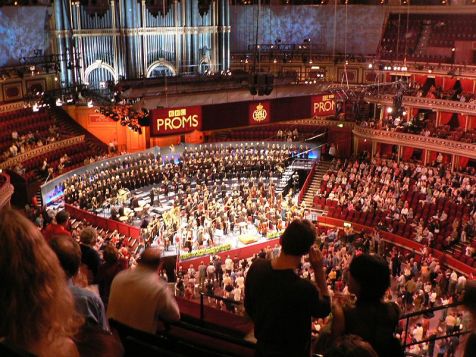
Proms vs. Sunderland

bbc_proms_31.jpg

In the latest of responses to the controversial remarks made by UK arts minister Margaret Hodge over the lack of cultural diversity and yet high levels of subsidy of the BBC Proms, Germaine Greer in The Guardian yesterday complained:

… the football supporter willing to beggar himself to pay for his season ticket is forced also to support a bloated opera house that generates second-rate product in return for massive government subsidy as well as huge amounts of corporate support. When it comes to arts subsidies, Hodge would do well to consider that London gluttonises at the expense of provincial Britain. (The same is not true of football.) If what the government wants is to bring people together, a usable and affordable rail system would be more effective than Hodge’s ill-considered attempt to guilt-trip the BBC into buggering up the Proms.

Greer’s attempt to define ‘culture’ in the widest sense possible so as to argue against arts subsidy falls pretty flat, as does her assertion that ‘There are so few black people at the Proms because they would rather be somewhere else.’ Candace Knight’s piece ‘All White on the Night’ on March 5th is a more compelling reflection on the experience of minorities at ‘high culture’ events, including her opinion that:

The exposure of all communities to high-level performance of all kinds is the first step in this cultural cross-pollination – in the manner of the open-air projected performances from Covent Garden. There needs to be an accompanying reintroduction of serious cross-cultural arts participation in schools at all levels, too.

But before this, adjusting the mindset – found at all levels of society – that, save for the educated and privileged few with time and money on their hands, there will be no interest in high culture, must be challenged. When cross-cultural experiences become the norm, the awkward looks will become increasingly a thing of the past, like smallpox or second-hand smoke.

In any event Hodge’s remarks have touched a nerve, evidenced by a steady stream of rebuttals published in letters and more letters to the newspaper; and quick distancing of No. 10 from her statement. Clearly however it would seem that the status of the Proms as a ‘sacred cow’ of British culture has occasioned much of the response, though the views offered by respondents on British cultural diversity and the arts have been interesting.

From an Irish point of view, the role of the arts within a multicultural or intercultural social agenda is still under development. The more recent arrival of substantial immigrant communities to Ireland means this discussion is still emerging, unlike the UK where the opportunity is ripe to address the outcomes of years of multi/inter cultural initiatives. Nevertheless the UK debate is instructive and evaluations of arts/cultural diversity initiatives will hopefully prove a useful source for the development of future Irish policy…

What’s the point of the Arts Council (England)?

Quentin Letts presented a programme this morning on BBC Radio 4 about the English Arts Council– it will be repeated this evening at 9 pm, and available afterwards for about a week on Radio 4’s website.