Fionnuala Croke appointed chief keeper and curator at the National Gallery

On Saturday the National Gallery of Ireland announced that Fionnaula Croke– a twenty year veteran at the Gallery– would be taking over the reins from Sergio Benedetti as head curator:

Ms Croke, who takes up her post this month, will have overall responsibility for managing the permanent collection and exhibitions at the gallery.

She told The Irish Times her main priority would be to enhance the permanent collection through acquisitions, research and the publication of gallery catalogues. The National Gallery gets €3 million a year from the Government to acquire new works.

The gallery is also planning a €45 million refurbishment of its older buildings and the construction of a new wing, which will be used to provide further gallery space.

From Churchtown in Dublin, Ms Croke joined the gallery in 1987 as a research fellow, and subsequently became curator of French paintings.

In the 1990s, she was also responsible for administering exhibitions and in 2000 was appointed head of exhibitions in anticipation of the opening of the Millennium wing of the gallery.
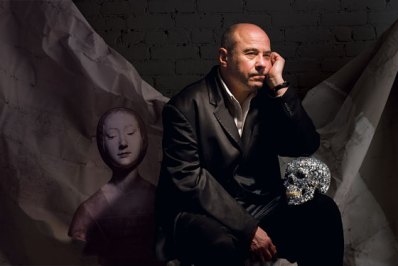

The Art of the Steal: the saga of Larry Salander

salander080331_1_560.jpg

I found this article from Portfolio chronicling the downfall of the New York art dealer Larry Salander an astonishing read. As the tombstone goes:

The Salander-O’Reilly gallery was set to open a jaw-dropping exhibit with works by Titian, Botticelli, and Caravaggio when a New York judge padlocked its doors amid allegations that its owner, Larry Salander, is behind one of the largest art frauds in history. Now plaintiffs including Wall Street financiers, the tennis star John McEnroe, and Sotheby’s auction house are trying to find out how more than $100 million went missing.

The extent of Salander’s financial wheeling and dealings is extraordinary, as are the sums of money involved… Salander’s original motive was to jolt contemporary art buyers away from a price feeding frenzy over the likes of Damien Hirst or Jeff Koons, and back towards reinvestment in Renaissance and Baroque art– itself a gutsy and laudable (if somewhat unrealistic) aspiration. Unfortunately it would seem that this grand gesture has instead fallen victim to old-fashioned greed, self-delusion and fraud:

Continue reading

If you don’t like it, bin it

Tuesday’s Irish Times saw the publication of a dismal opinion piece by Michael Parsons on the excesses of the contemporary art market, although I suppose it accurately reflects some common sentiment about the state of contemporary art. Moaning about the stratospheric prices of art world superstars (Bacon, Pollock, Emin, Hirst — though the first two are somewhat uneasy company with the latter two) is nothing new– but the sheer level of sweeping generalisation and stereotyped polemic evidenced by the article was remarkable.

‘Much contemporary art defies mockery,’ Parsons writes, but surely many artists seek to engage the category of ‘art’ precisely through absurdity or through the use of ephemeral media– perhaps even inviting the ‘mockery’ Parsons thinks they are impervious to? The critiques he hurls at Pollock’s ‘drip’ paintings (evidently this is because he ‘can’t paint’) and Hirst’s use of assistants to produce his work all seem based on an indignant response to their shoddy work ethic– how very Celtic Tiger, and how completely ahistorical… Pollock of course was a very competent ‘realist’ painter (having studied under Thomas Hart Benton), and his abstract paintings demonstrate an intense mastery of both form and concept. And of course, artists since the medieval period have used workshop assistants to produce art– so why all the fuss?

Continue reading

New Science Gallery launches with ‘Lightwave’ festival

lightwave.gif

The long-anticipated new Science Gallery at Trinity College Dublin will be launching in early February with the fantastic programme Lightwave (click here to download a programme pdf), running from 2-9 February. The festival offers a wide range of exhibitions and event on the theme of light, blurring the boundaries of science and art. Offerings include a fashion show, interactive games, films, a Volkswagon beetle covered with thousands of lights that will be patrolling Dublin city centre, and other happenings.. too many to list here! DO check out the schedule– this is something very unique that hasn’t been done in Ireland before, and it’s sure to be fantastic!

Post-(art)war

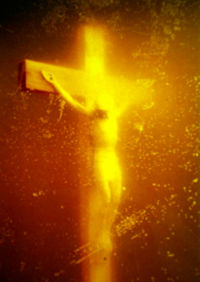
piss_christ.jpgThe ‘arms-length’ principle underpinning the Irish Arts Council is often subjected to a healthy dose of skepticism– nevertheless few public arts policy bodies have endured the heat of political scrutiny quite like the U.S. National Endowment of the Arts. Michael J. Lewis’ perceptive recent article in Commentary Magazine charts the decline of the NEA into the risk-averse and toothless grant-making organisation it’s largely become:

In brief, the NEA has withered in a matter of decades from a self-styled instrument of world peace to a cautious dispenser of largesse whose one inflexible principle is that no grant must ever redound to the administration’s embarrassment. Whether it can regain its early ambition—or whether it should try to—is an open question.

War-scarred with charges of obscenity and wastefulnes, the NEA now toes a pretty timid line on a tiny budget. Is there any hope of resurrecting the NEA into a force for progressive national arts policy? (more…)