Getting your Fringe on

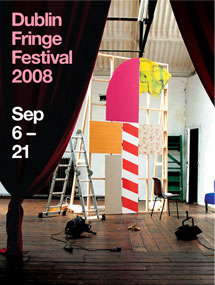
My highlight of the autumn kicks off with the Fringe Festival launching this Saturday! Over the years I’ve seen lots of productions, from brilliant to disastrous (more of the former and less of the latter), but I’m really excited this year about the staging of events in the Iveagh Gardens and the programme of street theatre (especially the opera Bastien and Bastienne). It’s Wolfgang Hoffman’s swan song after four years of running the festival, and the lineup looks like another stellar mix of theatre, dance, visual art and music.

MA programme alumnae Jenny Jennings is Programme Director for the Fringe and was interviewed in Saturday’s Irish Times about the upcoming festival and its drive to highlight new Irish talent:

Programme director Jennifer Jennings says that the strength of this year’s Irish element of the programme is more than accidental. It is a strategic part of Dublin Fringe Festival’s development over the past few years, and one that both Jennings and the festival’s outgoing artistic director, Wolfgang Hoffman, have been committed to fostering.

“We work as a platform for new artists,” Jennings explains. “I suppose you could say we are a producing partner, giving support ‘in lieu’ to emerging artists – from inviting them to use office facilities to giving them a place in the festival programme to, more recently, providing workshops for developing work.”

(yay Jenny!)

The Fringe website looks great too, with blogs and reviews (although it’d be great if they’d add an rss feed). This year tickets can be purchased from Filmbase and the Iveagh Gardens box office located on Hatch Street– the full programme pdf can be downloaded here.
Dublin Fringe Festival seeks Volunteers

I’m happy to pass on this announcement from the Fringe:

Dublin Fringe Festival Seeks Volunteers

The 2008 Dublin Fringe Festival takes place from the 6th until the 21st September and we are on the look-out for volunteers to help us to run Ireland’s most dynamic, exciting and rewarding festival.

You don’t need to love theatre or the arts to volunteer, but if you do all the better. Once you have plenty of positive energy, a willingness to get stuck in and some free time, come join us! Whether you have a few hours, a day, a week or a month, we want to hear from you. Apart from a valuable experience and an insight into festival management, we reward our volunteers with complimentary entries to shows, volunteer packs, references and a volunteer party to celebrate the occasion.

Details on the Roles and Application Form can be found on: http://www.drop.io/Dublin_Fringe_Volunteer

Password to enter site: Fringe (please note this is case sensitive)

Completed Application Form can be e-mailed to: volunteers@fringefest.com

Next step – Fringe Volunteer Coordinator will be in touch with you in the summer to let you know about our Volunteer Information/Recruitment event.

N.B. Volunteers need to be 18 years of age or older – Fringe terms & conditions apply for show tickets.

Theatre Forum annual conference: ‘Is it worth it?’

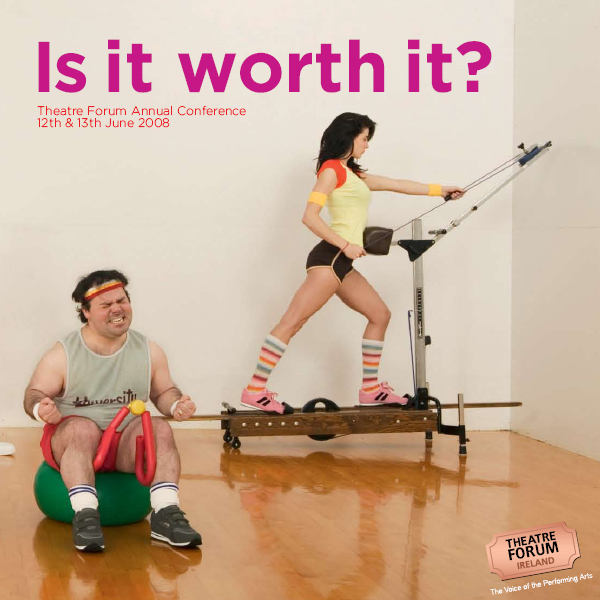
Theatre Forum has announced details of its annual conference on 12-13 June in Cork, which boasts a great line-up and a provocative series of sessions. A full programme can be downloaded here.

Theatre Forum responds to Arts Plan

At the end of last week Tania Banotti of Theatre Forum Ireland published the organisation’s response to the Arts & Culture Plan unveiled by Minister Brennan at the end of February, available on TF’s website and in Friday’s Irish Times. The piece expressed concerns about the purpose of the plan (given that an Arts Council plan is already currently active) and questioned its emphases on economic benefits and symbolic (rather than strategic) gestures:

On closer examination, the Minister’s document is not so much a plan as an extended statement on the current artistic landscape, and the activities of the national cultural institutions (such as the Abbey, the National Concert Hall, National Library, National Gallery and IMMA) in particular. One big question it raises is how much his Department, and by extension the State, values the arts for their intrinsic worth, and how much they see the arts as a social tool or as a plank of cultural tourism. The arts are an important economic contributor, and they can – and do – play an important role in terms of social inclusion. However, the arts are not primarily an instrument of economic or social policy. This can’t be allowed to become their primary function, or the only basis on which they are funded.

While the Minister comes under criticism for the instrumental tenor of his department’s plan, I think it less convincing to counter with the ‘art for art’s sake’ argument. Continue reading

Everybody Loves Sean

Writing in Saturday’s Irish Times, Fintan O’Toole weighed in again on the spat between Garry Hynes (of the Druid Theatre) and the Abbey, over a proposed cycle of Sean O’Casey’s three Dublin plays (celebrating the centenary of 1916 in 2016) that’s soured the relationship between them. In an earlier interview with Hynes which appeared in Thursday’s IT, the basis of the dispute was outlined:

According to Hynes, she approached the Abbey’s director Fiach MacConghail in 2006 with the idea of undertaking this project as a co-production. “I approached the Abbey and suggested that this would make an ideal co-production project. The Abbey has resources beyond what we had, and a relationship with the writer. Druid had the expertise and the proven ability to deliver on major projects of this kind and it seemed to me that that was an ideal and potentially very exciting co-production for the two organisations. It seemed to make complete sense to me, but the Abbey rejected the proposal.”

Just before Christmas 2007, according to Hynes, she discovered that the Abbey had in fact gone much further. Druid, which had been in discussion with the O’Casey estate on the rights to the plays, was told quite suddenly that the Abbey had taken the rights to both The Plough and Juno , making the Druid project impossible.

“We were gazumped by the Abbey. It was pretty disturbing. We were in the middle of negotiation. We were very much taken by surprise to find that the Abbey had purchased the rights to two of the plays, therefore making our plans untenable. And they had done that in the full knowledge of our plans.” Abbey director Fiach MacConghail accepts that he had some discussion with Hynes on the O’Casey project, but strongly rejects any suggestion that Druid was “gazumped” (see panel). What is clear, though, is that a potentially very significant project is now impossible and that Hynes’s own relationship with the Abbey, where she was artistic director in the early 1990s, is completely severed as a result.

Continue reading