Arts jobs, events, and publication announcements

umbrella-project

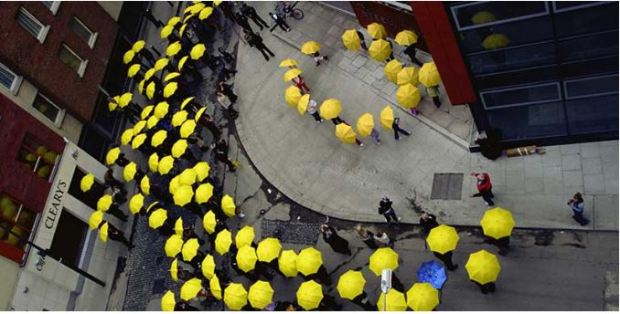
Places Matter The Umbrella Project by Rhona Byrne, commissioned by Fire Station Artists’ Studios and supported by Dublin City Council

Like most scholars of memory & Irish history on this island, I’m wiped – 2016 has been a crazy busy year due to centenary-related events (nine conference papers/presentations since Sept, plus an exhibition opening!) Apologies for the relative blog silence as consequence.

A few updates, in any event:

Jobs have recently been refreshed — lots of great ones in there: CEO for the Irish Baroque Orchestra; General Manager of Macnas; Collections Registrar for the National Trust NI; Heritage Officer for Westmeath Co. Council; etc.

Registrations are now being taken for Places Matter: what happens when we invest in the arts? on 12 January 2017, Dublin Castle, a one-day conference on local arts engagement organised by the Arts Council of Ireland in collaboration with Local Government. The speaker list looks very interesting (esp. keynote by Geoffrey Crossick), and I’m looking forward to seeing Emmett Kirwan in a new setting!

The Irish Museums Association’s Annual Lecture is next week (28 November) and this year features Diane Lees, Director-General of the Imperial War Museums. The lecture will be taking place in the special surroundings of the newly renovated Courthouse at Kilmainham Gaol. Tickets are only €5 and this lecture regularly books out, so do register to avoid disappointment.

Next week will also see the launch of two big projects, long in development:

  • The Irish Museums Survey 2016, the first major survey of Irish museums in more than a decade, will be launched at the National Library of Ireland on 30 November by Minister Heather Humphreys. I was the Principal Investigator on this project, which was funded by the Irish Research Council and executed in collaboration with the Irish Museums Association. I’ll be publishing a separate post after the launch, detailing some of our key findings, which will be of interest to anyone working in the heritage or museum sector on the island!
  • We’re very pleased as a School to announce the publication of After Francoise Henry: 50 Years of Art History at UCD (1965 – 2016), part of our current anniversary celebrations. arthistorybookIt features scholarly contributions from members of the staff, past and present. The book will be launched on Thursday, and will be available soon for purchase.
Scorchio! Hot arts jobs in the hot summer

GS_badges

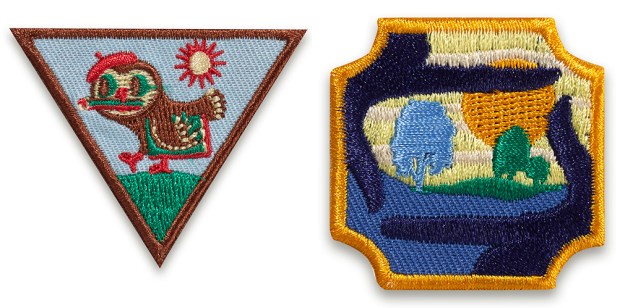
Newest Girl Scout badges: Art in the Outdoors

The jobs page was refreshed this morning with a whole summer crop of new positions! Perfect for perusing with iced tea in hand… stay cool, kids.

Who chooses cultural management as a career, and why?

1138819980

Today’s Arts Management Network newsletter carries a very interesting review of the French sociologist Vincent Dubois’ new book Culture as a Vocation: Sociology of career choices in cultural management.

Based on interviews with 654 students in MA courses in cultural management in France, it yields some intriguing insights on the demographics and aspirations of those seeking to become cultural managers (emphases mine):

Dubois examines, on the basis of his survey, the social factors and characteristics of the aspirants for an occupation in cultural management. In doing so he finds that these persons are mainly female, in the majority have a comparatively secure social background, often originate from families of academics and are equipped with a high educational capital. On top of that they frequently come out of an environment in which they early had the opportunity to socialize in a cultural way, as for example by getting private teaching lessons in music instruments or by being member of a theatre group.

This resonates strongly with my experience working in UCD’s Arts Management & Cultural Policy MA for 13 years. Given that arts management is often an economically precarious and competitive career, Dubois’ research into individual motivations for pursuing this path is intriguing:

Finally, Dubois points out further reasons for a career aspiration in cultural management – resulting from a broader social context. Thus, many of his study participants understand cultural work as an expression of self-fulfillment, freedom and satisfaction, because it gives them the feeling of doing something for the public welfare and acting for a higher purpose in life. Thereby, at the same time, they distance themselves from pure economically orientated occupational fields. A career in cultural management by that becomes a personal self-realization project, all in the sense of the central concepts of neo-capitalism.

Whether or not you agree such aspirations are an expression of neo-capitalist ideologies (and I would be more doubtful of aspects of this analysis), the descriptions Dubois offers are very compelling. To date, most research on the arts labour market deals with artists’ careers, incomes and training. Given the expansion and development of arts management as a specific career path (something I am directly involved with), this type of research is very valuable in thinking through the challenges of arts management training, and consequences for the sector as a whole. The overwhelming dominance of entry-mid level arts management positions by women, for example, is often remarked upon, but we understand little about the effect this actually has on careers, progression, and the functioning of arts organisations themselves.

One of the insights I found most interesting is Dubois’ description of the relationship between the social backgrounds of arts management and audience development agendas:

Dubois’ findings make it clear that the diversification of the audience required by cultural institutions can hardly be successful if the majority of their staff originates from academic families with a (high) cultural education. They simply cannot put themselves in the position of the living conditions of socially disadvantaged people or groups of society belonging to minorities and therefore in their work they reflect – as it is also criticised again and again – especially their own expectations of culture and cultural mediation.

This is a problem further exacerbated by the prevalence of unpaid internships in the arts, which creates a significant barrier to a diverse work force — a paradox not fully acknowledged by arts organisations that may run outreach programmes, but be structurally closed off for professional entry by individuals from similarly challenged backgrounds.

There are so many questions raised by this study — I look forward to reading the full text at length — and discussing whether they apply (or not) to the Irish experience.


Ways to make a living (in the arts)

MSDNITO EC005

NINE TO FIVE, (aka 9 TO 5), Lily Tomlin, Dolly Parton, Jane Fonda, 1980. TM and Copyright © 20th Century Fox Film Corp. All rights reserved..

The jobs page has just been refreshed — an unusual amount of public history positions on offer at the moment (maybe it’s the 1916 effect?) as well as many other positions… but what a week it’s been, especially for the ladies!

The Waking the Feminists campaign for gender equality in Irish theatre has been extraordinary, in its intensity, its reach, and hopefully its impact — catch up on the video of the public meeting held last week (12 November) in the Abbey. Possibly one of the defining moments for women in the arts over the last decade in Ireland.

My colleague Niamh NicGhabhann has penned an insightful blogpost on women and leadership in higher education – very kindly including me in her list of inspiring Irish academic women – thank you Niamh!

Some very cool theatre apprenticeships / residencies worthy of note:

  • Pan Pan Theatre is offering an International Mentorship & Bursary with Stewart Laing of Untitled Projects (deadline 19 November)
  • Applications for the 2016 MAKE residencies for developing creative theatre work (based at the Tyrone Guthrie Centre and co-organised by Theatre Forum, Cork Midsummer Festival, Project Arts Centre and Tiger Dublin Fringe) are closing soon (deadline 20 November)
  • The Lyric Theatre (Belfast) is hiring an Apprentice Producer as part of its participation in the Stage One: Regional Apprenticeship Scheme (deadline 30 December)

The Mermaid Arts Centre in Bray has come up with a groovy idea: it’s offering a funded ‘Gap Day’ to independent theatre creatives (directors, makers, writers, designers, production managers and creative producers) to take a day off to concentrate on creative thinking and dreaming – deadline for applications is 23 November.

Time’s running out to add your two cents on how CIRCA – Ireland’s only contemporary art publication for many years, until it folded in 2011 – might be revived /re-invigorated, with a series of small grants to support new ideas: deadline is this Thursday (19 November).

Would you know what to do if you made an archaeological discovery? Help out a Galway-based researcher who is conducting a survey to assess public awareness of reporting procedures.

Cobwebs plaguing your parlour? A day long seminar on taking care of historic houses is taking place on 26 November at Russborough House: Heritage Housekeeping: Philosophy and Practice is sponsored by the Irish Georgian Society and the Institute of Conservators-Restorers in Ireland, aimed at owners, managers and curators of heritage properties (both public and private).

The Irish Journal of Arts Management and Cultural Policy will shortly be launching its third issue – a special issue featuring contributions from the UCD/IADT cultural policy conference, ‘Mapping an Altered Landscape‘ held last year – watch for an announcement, I’m putting the finishing touches on it this week!

Our colleagues over at University of Warwick are hiring an Associate Professor in their acclaimed Centre for Cultural Policy (deadline is 2 December).

Finding & getting a job in the Irish arts sector

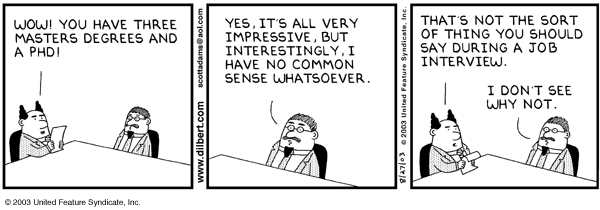
dilbert-interview ‘Tis the time of year when new graduates are starting to freshly scan the arts jobs horizon! I’ve just updated this site’s jobs listings (check out all the seasonal positions now open with Dublin Theatre Festival, folks) and have been fielding many emails, chats and cups of coffee over the past few weeks for folks on the job hunt (and employers looking for a few good men or women).

This morning the Guardian Culture Professionals Network posted a short piece by an arts management lecturer at Birkbeck asking What skills do arts sector grads need to develop their career? — and suggesting ways they have modified their university programme to respond:

The first was a physical space for reflection. The cultural sector is an amazing and exciting place to work because of the various types of roles and jobs available across so many different artforms. But such an array of opportunities can also be daunting when a fresh graduate is trying to find a way in. As a result we developed a series of workshops organised around guest lectures and practical exercises to provide students with the opportunity to think and work through what it means to be successful or how to deal with failure. It sounds conceptual, but it’s invaluable in a sector rife with overnight success stories and constant rejection that can often feel more personal than professional.

The second thing students wanted was experience: somewhere to practice what they felt were essential skills needed to obtain work in the sector. These skills ranged from how to put together a 10-minute pitch to knowing what your employment rights were if you were commissioned for a project or self-employed. On this front we invited sector professionals with relevant experience to speak to students about how to maintain a portfolio career and how to pitch. These talks offered them a chance to link what they had learned in class to practice in the field.

We’re constantly modifying our own MA in Arts Management programme here at UCD, so it made for an interesting read, with a few new ideas (and I’m looking forward to our annual feedback from the students, which is taken very seriously & is always useful!)

It also made me think – what advice do I give folks on the job market? Some of my general job-seeking tips are listed on the FAQ, but here are few other skills and attributes that (in my view) have helped folks find the arts sector work they’re looking for:

Be persistent. Even graduates with newly-minted postgraduate degrees, and significant experience, often have trouble finding that first foothold. It’s seldom easier for folks looking to transition at mid and higher level, as our small island is notorious for job stagnancy and mobility problems. Often times public sector jobs are advertised for tiny windows of time, or hiring is still done through networks rather than open advertisement. Let your friends and extended network know that you’re actively looking, and give as much time as you can to scan for opportunities.

Be flexible. In a sector now heavily populated by freelance and portfolio careers, finding the right combination of job, location, and compensation can be challenging. Consider the possibility of combining work from various sectors (working in marketing for both arts and commercial clients, for example). Have a look at analogous sectors that may be eager to hire someone with your skills (NGOs/charities, universities and school administration, the civil service/local authorities, etc.). If you’re flexible with geography, seize the opportunity to work overseas (in the US, UK, Europe, Canada, Australia). It’s of tremendous benefit to experience how different arts sectors work, and will forever alter your own view of how your professional life can or might evolve.

Be confident (but humble). Enthusiasm, passion for the arts and a strong sense of self make for an inspiring employee or co-worker, but the capacity to learn quickly, and willingness to take on anything that needs doing, are essential skills.

Be respectful. Keep in mind employers often receive dozens and dozens of CVs for a single position – many of which are from folks totally unqualified for the position, or who haven’t bothered to fully read the job description. Don’t be that person. Make sure your CV is well designed and attractive, proofread, has all the relevant details, and is easy to read — it’s not always necessary to keep it down to a page, but it’s the first professional impression you make, so give it time and attention. Sounds obvious, but you’d be surprised how poorly folks in the arts often represent themselves in this medium!

Take heart. You’re not alone if you’ve sent out dozens of applications with no joy; or if you’ve had to take a place-holding job to pay the bills; or felt the stress of multiple unpaid internships with few future prospects; or felt frustrated with the difficulties of finding a paid job that will reasonably support you and your family. I’ve made a few suggestions here on how to get out of a job-seeking rut — but the best advice can be simply to talk to someone else: share your experience, ask for feedback (and take it seriously), and find a few kindred spirits with whom you can openly and unreservedly discuss your aspirations and worries.

Any other constructive hints for job-seekers in the Irish arts sector would be most welcome!