Everybody Loves Sean

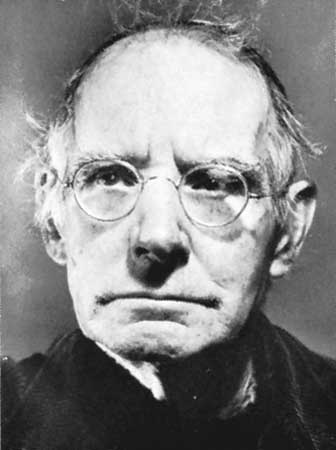
Writing in Saturday’s Irish Times, Fintan O’Toole weighed in again on the spat between Garry Hynes (of the Druid Theatre) and the Abbey, over a proposed cycle of Sean O’Casey’s three Dublin plays (celebrating the centenary of 1916 in 2016) that’s soured the relationship between them. In an earlier interview with Hynes which appeared in Thursday’s IT, the basis of the dispute was outlined:

According to Hynes, she approached the Abbey’s director Fiach MacConghail in 2006 with the idea of undertaking this project as a co-production. “I approached the Abbey and suggested that this would make an ideal co-production project. The Abbey has resources beyond what we had, and a relationship with the writer. Druid had the expertise and the proven ability to deliver on major projects of this kind and it seemed to me that that was an ideal and potentially very exciting co-production for the two organisations. It seemed to make complete sense to me, but the Abbey rejected the proposal.”

Just before Christmas 2007, according to Hynes, she discovered that the Abbey had in fact gone much further. Druid, which had been in discussion with the O’Casey estate on the rights to the plays, was told quite suddenly that the Abbey had taken the rights to both The Plough and Juno , making the Druid project impossible.

“We were gazumped by the Abbey. It was pretty disturbing. We were in the middle of negotiation. We were very much taken by surprise to find that the Abbey had purchased the rights to two of the plays, therefore making our plans untenable. And they had done that in the full knowledge of our plans.” Abbey director Fiach MacConghail accepts that he had some discussion with Hynes on the O’Casey project, but strongly rejects any suggestion that Druid was “gazumped” (see panel). What is clear, though, is that a potentially very significant project is now impossible and that Hynes’s own relationship with the Abbey, where she was artistic director in the early 1990s, is completely severed as a result.

Continue reading

Minister for the Arts announces launch of ‘Oinseach’

Today Seamus Brennan, Minister for Arts, Sport and Tourism announced the launch of the ‘Oinseach’ pilot scheme, the long-awaited programme that will offer funding for arts managers seeking assistance for further professional development. The scheme is open (but not limited to) funding for the following activities:

  • Attendance at international professional conferences
  • Financial assistance for arts managers below established income levels
  • Support for magazine and journal subscriptions
  • Subsidy for attendance at major cultural festivals and events

For more details of the announcement click here.

He did the arts some service

haughey.jpg

Having missed it the first time around, the rebroadcast on Tuesday of the RTE Arts Lives programme on Charles Haughey (‘Patronising the arts’– no pun intended, I think) was a fascinating look at his influence on state patronage of the arts from the 1960s onwards. It offered a nuanced look at his personal and political interests in promoting the visual arts– which artforms benefited and which lost out, the creation and effect of the artists’ tax exemption, and the establishment of Aosdana– all of which give a rich context to the the current status of state arts support (see an older review of it here).

In the end I think a mixed result emerged– probably apropos given the complex figure of Haughey–but possibly the best bit came as the credits rolled, when various culture pundits reacted to the tongue-in-cheek equestrian portrait of Haughey by Edward McGuire… that single work seemed to sum up much about both the man and the myth!

Proms vs. Sunderland

bbc_proms_31.jpg

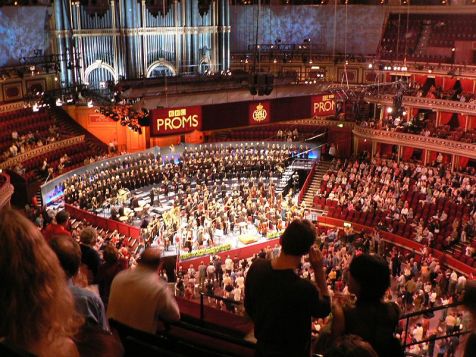
In the latest of responses to the controversial remarks made by UK arts minister Margaret Hodge over the lack of cultural diversity and yet high levels of subsidy of the BBC Proms, Germaine Greer in The Guardian yesterday complained:

… the football supporter willing to beggar himself to pay for his season ticket is forced also to support a bloated opera house that generates second-rate product in return for massive government subsidy as well as huge amounts of corporate support. When it comes to arts subsidies, Hodge would do well to consider that London gluttonises at the expense of provincial Britain. (The same is not true of football.) If what the government wants is to bring people together, a usable and affordable rail system would be more effective than Hodge’s ill-considered attempt to guilt-trip the BBC into buggering up the Proms.

Greer’s attempt to define ‘culture’ in the widest sense possible so as to argue against arts subsidy falls pretty flat, as does her assertion that ‘There are so few black people at the Proms because they would rather be somewhere else.’ Candace Knight’s piece ‘All White on the Night’ on March 5th is a more compelling reflection on the experience of minorities at ‘high culture’ events, including her opinion that:

The exposure of all communities to high-level performance of all kinds is the first step in this cultural cross-pollination – in the manner of the open-air projected performances from Covent Garden. There needs to be an accompanying reintroduction of serious cross-cultural arts participation in schools at all levels, too.

But before this, adjusting the mindset – found at all levels of society – that, save for the educated and privileged few with time and money on their hands, there will be no interest in high culture, must be challenged. When cross-cultural experiences become the norm, the awkward looks will become increasingly a thing of the past, like smallpox or second-hand smoke.

In any event Hodge’s remarks have touched a nerve, evidenced by a steady stream of rebuttals published in letters and more letters to the newspaper; and quick distancing of No. 10 from her statement. Clearly however it would seem that the status of the Proms as a ‘sacred cow’ of British culture has occasioned much of the response, though the views offered by respondents on British cultural diversity and the arts have been interesting.

From an Irish point of view, the role of the arts within a multicultural or intercultural social agenda is still under development. The more recent arrival of substantial immigrant communities to Ireland means this discussion is still emerging, unlike the UK where the opportunity is ripe to address the outcomes of years of multi/inter cultural initiatives. Nevertheless the UK debate is instructive and evaluations of arts/cultural diversity initiatives will hopefully prove a useful source for the development of future Irish policy…

Feis Ceoil faces crisis

feis-ceoil.jpg

Over the weekend the Irish Times reported on fears over the Feis Ceoil’s future, following a budget crisis and the need for resources to maintain and grow the competition:

Over the years, the Feis Ceoil has grown from its starting point of 32 different competitions categories to the 177 it now boasts. Choirs, orchestras, ensembles and soloists on all manner of instruments from eight years old upwards have been steadily convening in halls and venues in and around the RDS in Ballsbridge since last Monday for this annual event, which has expanded to such an extent that it now spans a full fortnight […] the Feis Ceoil has only faltered on one occasion, when it was cancelled six years ago during the height of the foot-and-mouth crisis.

“Apart from that it has always gone ahead,” says Carmel Byrne, who has been the Feis Ceoil administrator for the past 10 years. “Through wars and the Easter Rising, and the Talbot Street bombing and everything, they still went on with the Feis.”

Now it seems that an event world wars couldn’t hold back may be threatened instead by lack of funds, even as its popularity thrives and the number of entrants increases on an annual basis. It is its exponential growth that may even bring about its downfall, explains Deirdre Kelleher, who has been on the Feis Ceoil’s board of directors for three decades. “The Feis Ceoil has expanded and there are more people, therefore more usage of halls, therefore more time spent,” she says. “The artistic cost of living has caught up with us.”

With a €100,000 budget shortfall due to the departure of Siemens, their sponsor of 22 years, the Feis is appealing to government and private sponsors to keep the competition going. A petition to government has been launched by the Feis; details are available from their website.