More budget woes northside…

koaarally2.jpgThink the arts sector is underfunded in Ireland? Spare a thought for our neighbours in the north, currently facing significant budget cuts in the proposed Budget 2008-2011, when per capita spending on the arts is already half of that in the Republic: ‘Public spending per capita on the arts in the year 2006-07 was: in the Republic of Ireland £12.61; in Scotland £11.93; in Wales £8.80; in England £8.39; in Northern Ireland £6.13 (£10.5m).’ (Source: ACNI)

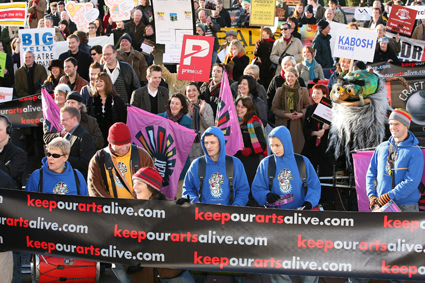
The ACNI’s Multi Annual funding programme has already been discontinued, and it warns that many more programmes and organisations will lose funding if the proposed budget goes ahead. A rally was held yesterday at Stormont to demonstrate support for the arts in Northern Ireland:

Arts Sector rally to Save the Arts (link)
10/12/2007

Northern Ireland ’s arts sector, supported by the Arts Council, today organized the Keep Our Arts Alive rally in a bid to save the arts and to improve the allocation contained within the Draft Budget 2008-2011, currently out for public consultation and which closes on 4th January 2008.

The arts in Northern Ireland are in danger of dying from neglect. That was the message of artists, arts professionals and supporters who gathered at Carson’s statue at Stormont to make a public call for increased arts funding.

Dressed in costume and carrying the tools of their arts and banners, supporters presented the Chair of the CAL Committee, Barry McElduff, with a letter which calls upon government to rethink the final budget settlement. This letter explained how the draft budget proposal pushes the sector into continuing downward spiral of decay and highlighted the negative impact it will have on the economy as a whole.

Artists Danny Devenney and Mark Ervine also unveiled a blank canvas to represent Northern Ireland without art – a consequence that Northern Ireland may have to tackle.

The advantages to be gained from meaningful investment in the arts have not been recognised by Northern Ireland’s main political parties, which gave overwhelming support in October to a Private Members’ Motion, calling on the Executive ‘to raise the level of arts funding to at least the United Kingdom average within the forthcoming Comprehensive Spending Review’. Regrettably this support is not reflected in the Draft Budget.

Speaking on behalf of the arts sector, Ali FitzGibbon, Director, Young at Art said, “The arts industry desperately needs this investment and has shown it is necessary to a peaceful, fair and prosperous society. All the parties backed a bid for parity of funding. *Over 70% of the population attends arts and culture events and 78% believe it should be funded. The case has been made and the priorities and budget must follow suit and increase spending on the arts to a realistic level.”

Roisín McDonough, Chief Executive, Arts Council of Northern Ireland, commented, “If the allocation is not increased this will have devastating consequences for the arts sector. Our artists and core organisations will face a bleak future, and pressing developmental work will not be undertaken.”

“The people of Northern Ireland deserve the same cultural entitlement as their neighbours on these islands and I am asking everyone who understands the rewards to be found from investment in the arts to make their feelings clear during the public consultation process. The Northern Ireland Assembly must rethink its budget allocation for the arts.”

To find out more about the campaign to improve the funding situation for the arts in Northern Ireland, visit www.keepourartsalive.com, visit the Arts Council of Northern Ireland’s ‘Campaigning for the Arts’ webpages or telephone (028) 9038 5200.

*Arts and Culture, (2004), Arts Council of Northern Ireland Study
Budget 2008 and the Arts

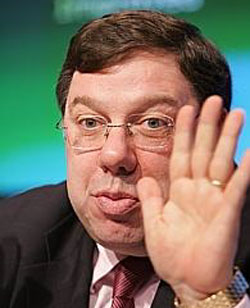
cowen.jpgWell, the figures are out, and it’s a mixed bag for the arts. The Film Board appears to be the clear winner, with an increase of 18% in its funding. However an initial Irish Times article trumpeting a €245 million ‘boost’ for the arts overlooked the fact that the Arts Council’s meagre increase– €5 million, instead of the €20 million they were seeking– actually represents a decline in the Arts Council’s grant in real terms (this is discounting the extra €3 million earmarked by the government for touring programmes). The multi-annual funding sought has failed to materialise, and it looks likely the ability of the AC to realise its Partnership for the Arts plan will be significantly impacted in light of these budget figures. Reactions are still emerging, but perhaps worse was expected for the days of collective belt-tightening we’re told are ahead…

Brennan congratulated for 5.25% rise to €245m
Deirdre Falvey, Arts Editor
The Irish Times, Thursday, December 6, 2007

ARTS: The budget for the arts in Ireland has been increased by 5.25 per cent to €245 million for 2008. This figure includes departmental money for the arts – €208.4 million, up 1 per cent from €206 million last year – as well as some OPW funding and the National Gallery, funded separately for historical reasons, which increases 7 per cent to €12.6 million.

The Arts Council’s budget is set at €82 million, an increase of 3 per cent on last year, but the Minister for Arts, Sports and Tourism Séamus Brennan announced a supplementary estimate allocating an extra €3 million, specifically for touring.

That means the Arts Council will have €85.1 million, the Minister said, an increase of 6.4 per cent. The Arts Council had sought an increase of €20 million to fund the Partnership for the Arts.

The Budget also included investment of €40 million for arts and culture infrastructure under the Access II programme – this is money which has already been allocated. There were increases for cultural institutions including the National Library and Museum, Imma, the Crawford Gallery, Chester Beatty Library and National Concert Hall, ranging from 6 to 11 per cent.

Culture Ireland, the agency that promotes Irish art abroad, increased its funding by 6 per cent to €4.75 million. The Film Board got an increase of 18 per cent to €23.2 million, mostly on the capital side. There is a commitment to retaining Section 481 tax relief for film until at least 2012.

The Minister said the rise was in line with what most departments got and he was “glad to be able to protect the arts side in particular”. Arts Council chairwoman Olive Braiden said she was “pleased with the outcome, especially in the circumstances of current public finances. I congratulate Mr Brennan in maintaining the Government’s existing significant commitment to the arts.

“The Arts Council looks forward to working with the Minister in the year ahead to build on this year’s provision.” She added that the council would be “continuing its work to achieve an allocation of over €100 million for the arts annually”.

Tania Banotti of Theatre Forum, representing theatre and the performing arts, said: “This Budget was tricky, so well done to the Minister for getting us there with a short lead-in time. The ‘begging bowl’ for the arts at the Government table is gone.”

But she added that there would be disappointment. “An increase of 3 per cent for the Arts Council is very small. Inflation is running at 5 per cent, so this is a cut in real terms. There are challenging times ahead for the arts sector.”

If the Turner Prize isn’t your bag…

… Jonathan Jones in The Guardian has a few suggestions for you:

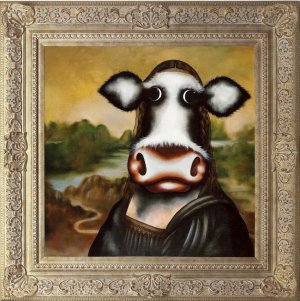
moona_lisa.jpg

Who’s buying these Old Moosters?
Jonathan Jones
Monday December 3, 2007
The Guardian

The truth is very few people really like art. This is the dirty secret that makes a living for artists such as Caroline Shotton. She is a new addition to that august company of artists who have careers, it seems, solely on the back of the joy the public takes in upsetting art critics, especially at Turner prize time.The hilarious gimmick of this Central St Martin’s-educated painter is to put cows in the classics. She’s done the Mona Lisa as a cow and turned The Scream into The Moo. Klimt’s The Kiss becomes The Smooch and Cow with a Pearl Earring is her take on Vermeer. Breezily painted, big-eyed bovine faces whose blocky good humour would be diverting on a birthday card stare back at you from lurid pink and blue canvases.

Shotton, who started out as a commercial artist and took up her current, er, more personal and creative approach after having her first child, is typical of the new breed of artist who thrives on today’s market anarchy. Her works sell in limited-edition prints on block canvas through local dealers and online art stores at up to £600 a time; this has been touted as totalling £3m in sales. Just as the combination of affluence, the internet, and the rejection of lofty cultural standards by the art world has made stars of Jack Vettriano and Banksy, it has enabled Shotton to accumulate enough sales and attention to be promoted as the latest bad-taste popular artist. And I sympathise, I really do, if you’re reading this and siding with her for slapping the art snobs’ faces. Critics and museums lie when they claim serious art is accessible. It is obscure and demanding. The most worthwhile art improves when studied repeatedly and some simply refuses a casual glance, as Sir Joshua Reynolds recognised when he warned young artists that they wouldn’t get too excited the first time they saw a Raphael – they must persist until they liked him. Who has time for that now?

High art is no easier to understand, no more transparent, than classical music – and no less rewarding. But while classical music occupies its own separate cultural sphere, and if you don’t want to listen you don’t have to, art gets in your face. You feel you have to go and see King Tut or the Turner prize – and come away so bored and alienated you get your revenge by buying a print of Shotton’s Moona Lisa.

Censorship and the Kremlin

“Era of Mercy,” Marat Guelman Gallery

‘The climate has totally changed. What was allowed the day before yesterday now is dangerous. They don’t repress like the Soviets yet, but give them two years, they will find the way.’ (Viktor Yerofeyev)

Michael Kimmelman’s recent article in The New York Times takes a hard look at the encroaching culture of censorship and state control of the arts in Russia, where the curator of a Paris show on Russian contemporary art faces criminal charges. As artists and writers protest the Kremlin’s cultural myopia, the ‘culture wars’ intensify (more…)

Opera’s bringing sexy back

tfm_poster_v02_web.jpg

The Arts Council’s Public and the Arts Survey (2006) tells us audiences for opera are in decline: what gives? According to Peter Conrad in The Observer, arts marketers are seeking out new ways of seducing listeners back into seats… (more)