Gloomy days for the arts

It’s feeling cold out there, and not just from the dusting of snow outside this morning.

Continuing on from Friday’s post, this morning’s Irish Times carries two more articles on the effect of the Arts Council’s funding cuts on theatre and music. Peter Crawley reports on the closure of three small production companies (Galloglass, Storytellers and Calypso) as a consequence of the new strategy to cull organisations perceived as artistically weaker from the AC trough, while maintaining funding for the biggies. This predictably has met with mixed reaction, which Crawley (to his credit) fairly assesses, noting that the slippery criterium of ‘artistic excellence’ has served as the fulcrum for artform funding decisions:

There is more sense in the strategy than some would care to admit though. A couple of years ago, during Theatre Forum’s annual conference, one of the best attended and breathlessly titled discussions was: How do we Approach the Issue of Encouraging the Arts Council to Cut Companies Who are ‘Past It’ to Enable New Talent to Breathe?

With the economy then going strong, but arts funding forever in short supply, theatre companies themselves harboured the suspicion that there were simply too many of them to sustain, and that the council was notoriously slow to cull the panjandrums. Now the problem is deciding who’s ‘past it’.

Not an enviable position for David Parnell of the Arts Council, partially tasked with making such artistic evaluations:

The Arts Council will not discuss individual cases with the media, but David Parnell admits that artistic quality is the ultimate measure. In the case of de-funded companies, he says, “ultimately the work is not as good as the work being offered by other organisations, and in the context of shrinking budgets we have to take these difficult decisions . . . Fundamentally, it comes down to the quality of the work offered and the ambition of the work.”

There are familiar complaints as well about the lack of transparency concerning decision criteria and a flawed appeals policy, as well as the interesting suggestion that the shrunken funding pool may push forward a new model for theatre production, away from the company model and towards a new ‘hub’-like structure. Well worth a read…

Michael Dervan offers another take on the harsh economic climate for the arts, revisiting the music cuts which have already been well covered by the IT (Opera 2005 in particular), but mentioning also the anticipated drop in corporate sponsorship:

The nightmares that the banking sector is living through will have consequences for the arts too. Sponsorship and other forms of corporate generosity will be reined in. One of the major musical sponsorships of recent years has been Anglo Irish Bank’s support of the RTÉ National Symphony Orchestra’s subscription series at the National Concert Hall. RTÉ has always given the impression that Anglo Irish managed to strike a happy balance between the supportive and demanding sides of sponsorship, meaning that the bank’s profile in the deal was clear but not obtrusive. Although the sponsorship was a long-term one, it was reviewed – and hitherto renewed – on an annual basis.

However, with the bank in a crisis that has led to its nationalisation, the sponsorship deal, believed to be worth six figures, may not survive assessment in the light of the new realities.

More on this on a forthcoming post, which will review two new reports recently released on philanthropy and sponsorship in Ireland…
Will you still need me, who will succeed me…

A few weeks ago the Los Angeles Times carried an interesting story on the ‘graying’ of perfoming arts audiences, seeking to refute the perception that interest classical music is dying out:

[…] representatives of such organizations also offer compelling reasons why seeing gray hair — or, at least, gray roots — in the audience is (a) nothing new and (b) not necessarily a cause for panic, because, at least so far, there has always been “new gray” waiting in the wings to replace the old.

“A colleague of mine says the audience isn’t graying — it’s always been gray,” says Teresa Eyring, executive director of Theatre Communications Group, a national service organization for American nonprofit theaters.

Perhaps nothing earth-shattering here, but it is refreshing to hear the reactions of folks on the ground in response to this perennial whinge…

(read the rest of the article)

Culture Night 2008: this Friday!

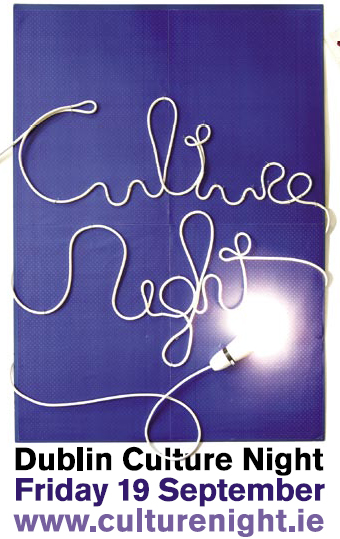
Just a reminder to all you vultures out there– the third annual Culture Night takes place this Friday, September 19th, from 5-11 pm. In Dublin more than 100 arts & cultural organisations will be staying open late, offering unique & fun programming for this evening only. Temple Bar Cultural Trust is the driving force behind the initiative, which includes special bus routes (map pdf) laid on to take vultures from spot to spot, and lots of outdoor performances and entertainment.

It’s not just Dublin getting all the action either:

Culture Night Cork: http://www.corkcity.ie/culturenight
Culture Night Limerick: http://www.limerickcity.ie
Culture Night Galway: http://www.galwaycity.ie

Last year’s event had a great buzz to it– wandering around the National Gallery at near 11 pm was a surreal highlight for me!– and it’s a great chance to check out (for free!) sites that normally require admission. I’ve got a few circled already… 🙂

Copies of the programme can be downloaded as a pdf here, or picked up in print copy from participating venues, the Suffolk St Dublin tourist office, or Temple Bar Cultural Information Centre at 12 East Essex Street (the latter two will be open 9am until 11pm on Culture Night).

Wexford Opera House launches

architects' rendering of opera house

architects' rendering of opera house

It would have been tough to miss all the coverage over the weekend of the fabulous new Wexford Opera House opening! First there was Pat Kenny & the Late Late crew broadcasting live from the new venue on Friday, then a feature by Irish Times architecture critic Frank McDonald:

The new opera house, with 7,235sq m of floor space, is three times larger than the old theatre, but although its flytower rises to the equivalent of eight storeys, it is barely visible above the ridge-line of High Street. Thus, the “surprise and delight of discovery”, as McGahon puts it, is still there.

The smart-looking foyer leads up to a much larger atrium that links the three levels of the auditorium. Box-balustered staircases in dark Canadian walnut are offset against white walls, creating a great space for people-watching – a stage set for the flâneur before and after performances.

[…]

THE NEW THREE-TIERED auditorium is a revelation. With its walls, ceiling, floors and bow-shaped balconies entirely clad in dark walnut (from sustainably managed forests), it almost seems to be hewn out of a huge block of timber. It has a cave-like quality, which is slightly off-putting until you get used to it.

Keith Williams likens this extraordinary interior to a stringed instrument.

“We echoed the sensuous curves of a cello to make this room,” he says. “Even the curved steel lighting bridges are analogous to the technical bits of the cello.

The new space looks set to be a triumph for the architects and the OPW involved on the project, and will set off the Wexford Opera festival in style when it launches on 16 October with the opeara ‘Snehurochka, The Snow Maiden‘ (already fully sold out!)

Getting your Fringe on

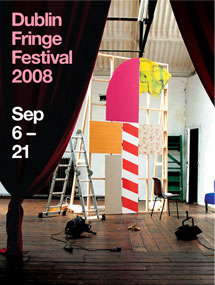
My highlight of the autumn kicks off with the Fringe Festival launching this Saturday! Over the years I’ve seen lots of productions, from brilliant to disastrous (more of the former and less of the latter), but I’m really excited this year about the staging of events in the Iveagh Gardens and the programme of street theatre (especially the opera Bastien and Bastienne). It’s Wolfgang Hoffman’s swan song after four years of running the festival, and the lineup looks like another stellar mix of theatre, dance, visual art and music.

MA programme alumnae Jenny Jennings is Programme Director for the Fringe and was interviewed in Saturday’s Irish Times about the upcoming festival and its drive to highlight new Irish talent:

Programme director Jennifer Jennings says that the strength of this year’s Irish element of the programme is more than accidental. It is a strategic part of Dublin Fringe Festival’s development over the past few years, and one that both Jennings and the festival’s outgoing artistic director, Wolfgang Hoffman, have been committed to fostering.

“We work as a platform for new artists,” Jennings explains. “I suppose you could say we are a producing partner, giving support ‘in lieu’ to emerging artists – from inviting them to use office facilities to giving them a place in the festival programme to, more recently, providing workshops for developing work.”

(yay Jenny!)

The Fringe website looks great too, with blogs and reviews (although it’d be great if they’d add an rss feed). This year tickets can be purchased from Filmbase and the Iveagh Gardens box office located on Hatch Street– the full programme pdf can be downloaded here.