If you don’t like it, bin it

27 March 2008

Tuesday’s Irish Times saw the publication of a dismal opinion piece by Michael Parsons on the excesses of the contemporary art market, although I suppose it accurately reflects some common sentiment about the state of contemporary art. Moaning about the stratospheric prices of art world superstars (Bacon, Pollock, Emin, Hirst — though the first two are somewhat uneasy company with the latter two) is nothing new– but the sheer level of sweeping generalisation and stereotyped polemic evidenced by the article was remarkable.

‘Much contemporary art defies mockery,’ Parsons writes, but surely many artists seek to engage the category of ‘art’ precisely through absurdity or through the use of ephemeral media– perhaps even inviting the ‘mockery’ Parsons thinks they are impervious to? The critiques he hurls at Pollock’s ‘drip’ paintings (evidently this is because he ‘can’t paint’) and Hirst’s use of assistants to produce his work all seem based on an indignant response to their shoddy work ethic– how very Celtic Tiger, and how completely ahistorical… Pollock of course was a very competent ‘realist’ painter (having studied under Thomas Hart Benton), and his abstract paintings demonstrate an intense mastery of both form and concept. And of course, artists since the medieval period have used workshop assistants to produce art– so why all the fuss?

Read the rest of this entry »


He did the arts some service

27 March 2008

haughey.jpg

Having missed it the first time around, the rebroadcast on Tuesday of the RTE Arts Lives programme on Charles Haughey (‘Patronising the arts’– no pun intended, I think) was a fascinating look at his influence on state patronage of the arts from the 1960s onwards. It offered a nuanced look at his personal and political interests in promoting the visual arts– which artforms benefited and which lost out, the creation and effect of the artists’ tax exemption, and the establishment of Aosdana– all of which give a rich context to the the current status of state arts support (see an older review of it here).

In the end I think a mixed result emerged– probably apropos given the complex figure of Haughey–but possibly the best bit came as the credits rolled, when various culture pundits reacted to the tongue-in-cheek equestrian portrait of Haughey by Edward McGuire… that single work seemed to sum up much about both the man and the myth!


MA in Arts Management & Cult Policy at UCD

25 March 2008
alumni.jpgInterested in pursuing a professional career in arts management, in Ireland or abroad? Our one-year MA programme here at UCD is currently accepting applications for 2008-9. The application deadline is April 15th; please feel free to contact me or our department administrator if you’re interested in the programme.

Proms vs. Sunderland

25 March 2008

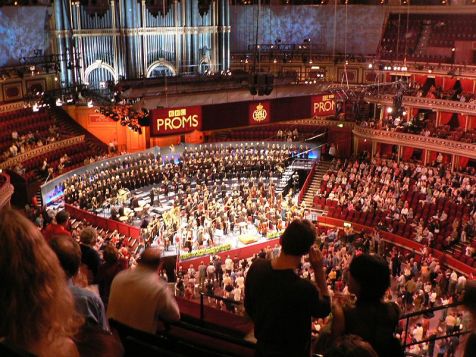
bbc_proms_31.jpg

In the latest of responses to the controversial remarks made by UK arts minister Margaret Hodge over the lack of cultural diversity and yet high levels of subsidy of the BBC Proms, Germaine Greer in The Guardian yesterday complained:

… the football supporter willing to beggar himself to pay for his season ticket is forced also to support a bloated opera house that generates second-rate product in return for massive government subsidy as well as huge amounts of corporate support. When it comes to arts subsidies, Hodge would do well to consider that London gluttonises at the expense of provincial Britain. (The same is not true of football.) If what the government wants is to bring people together, a usable and affordable rail system would be more effective than Hodge’s ill-considered attempt to guilt-trip the BBC into buggering up the Proms.

Greer’s attempt to define ‘culture’ in the widest sense possible so as to argue against arts subsidy falls pretty flat, as does her assertion that ‘There are so few black people at the Proms because they would rather be somewhere else.’ Candace Knight’s piece ‘All White on the Night’ on March 5th is a more compelling reflection on the experience of minorities at ‘high culture’ events, including her opinion that:

The exposure of all communities to high-level performance of all kinds is the first step in this cultural cross-pollination – in the manner of the open-air projected performances from Covent Garden. There needs to be an accompanying reintroduction of serious cross-cultural arts participation in schools at all levels, too.

But before this, adjusting the mindset – found at all levels of society – that, save for the educated and privileged few with time and money on their hands, there will be no interest in high culture, must be challenged. When cross-cultural experiences become the norm, the awkward looks will become increasingly a thing of the past, like smallpox or second-hand smoke.

In any event Hodge’s remarks have touched a nerve, evidenced by a steady stream of rebuttals published in letters and more letters to the newspaper; and quick distancing of No. 10 from her statement. Clearly however it would seem that the status of the Proms as a ‘sacred cow’ of British culture has occasioned much of the response, though the views offered by respondents on British cultural diversity and the arts have been interesting.

From an Irish point of view, the role of the arts within a multicultural or intercultural social agenda is still under development. The more recent arrival of substantial immigrant communities to Ireland means this discussion is still emerging, unlike the UK where the opportunity is ripe to address the outcomes of years of multi/inter cultural initiatives. Nevertheless the UK debate is instructive and evaluations of arts/cultural diversity initiatives will hopefully prove a useful source for the development of future Irish policy…


What’s the point of the Arts Council (England)?

25 March 2008

Quentin Letts presented a programme this morning on BBC Radio 4 about the English Arts Council– it will be repeated this evening at 9 pm, and available afterwards for about a week on Radio 4′s website.


Cultural Policy Research Award 2008 – Call for Applications

14 March 2008

ENCATC calls for Applications

The European Cultural Foundation, the Riksbankens Jublileumsfond and the European Network of Cultural Administration and Training Centres (ENCATC) call for applications for the 5th Cultural Policy Research Award 2008. The winner of the CPR Award 2008, worth Euro 10,000, will be publicly announced on the 16th of October at the International ENCATC Annual Conference taking place in Lyon, France.

Read the rest of this entry »


Feis Ceoil faces crisis

13 March 2008

feis-ceoil.jpg

Over the weekend the Irish Times reported on fears over the Feis Ceoil’s future, following a budget crisis and the need for resources to maintain and grow the competition:

Over the years, the Feis Ceoil has grown from its starting point of 32 different competitions categories to the 177 it now boasts. Choirs, orchestras, ensembles and soloists on all manner of instruments from eight years old upwards have been steadily convening in halls and venues in and around the RDS in Ballsbridge since last Monday for this annual event, which has expanded to such an extent that it now spans a full fortnight [...] the Feis Ceoil has only faltered on one occasion, when it was cancelled six years ago during the height of the foot-and-mouth crisis.

“Apart from that it has always gone ahead,” says Carmel Byrne, who has been the Feis Ceoil administrator for the past 10 years. “Through wars and the Easter Rising, and the Talbot Street bombing and everything, they still went on with the Feis.”

Now it seems that an event world wars couldn’t hold back may be threatened instead by lack of funds, even as its popularity thrives and the number of entrants increases on an annual basis. It is its exponential growth that may even bring about its downfall, explains Deirdre Kelleher, who has been on the Feis Ceoil’s board of directors for three decades. “The Feis Ceoil has expanded and there are more people, therefore more usage of halls, therefore more time spent,” she says. “The artistic cost of living has caught up with us.”

With a €100,000 budget shortfall due to the departure of Siemens, their sponsor of 22 years, the Feis is appealing to government and private sponsors to keep the competition going. A petition to government has been launched by the Feis; details are available from their website.


Lighthouse Cinema set to open in Smithfield Square

13 March 2008

Last week’s Ticket carried a story about the impending launch of the new Light House Cinema, on May 9th:

The new Light House at Smithfield is a custom- built, four-screen cinema with a 614-seat capacity – 277 in the largest auditorium, and seating for 153, 116 and 68 in the others.

“The four screens will allow for enormous flexibility in terms of programming, delivering a greater choice and diversity of films to invigorate the cultural cinema landscape in Ireland,” promise Neil Connolly and Maretta Dillon, who also ran the original Light House on Middle Abbey Street until it closed in 1996. The new venue promises “stunning, imaginative architecture, making Light House at Smithfield the most unique of cinema spaces”.

Says architect Colin Mackay: “The organisation and distribution of screens will allow patrons to walk over, under and around the forms, affording an alternative and dramatic cinema experience.”

The old Light House Cinema on Abbey Street closed in 1996;  this new addition to Dublin’s cultural landscape is bound to be a popular one, and will hopefully breathe some life into the Smithfield development, which has had its share of difficulty creating a sense of community and activity around its swish new buildings.


Don’t let the turkeys get you down

4 March 2008

dustintheturkey.jpgApologies for the gap in postings– and with so much going on!  An Oscar for Once, a turkey headed to Serbia, and a new series on the arts in Ireland in The Irish Times… it’s all heady stuff ;)

Last thing first: the recent series about the arts in The Irish Times has dealt over the past few weeks with the value of the arts and inclusion issues, drawing quotes from various figures working in Irish arts organisations. Yet the series has, to me, felt pretty unoriginal and written in ‘student essay’ mode… this discourse about the social value and instrumentality of the arts is one that has long been in the public domain, and is discussed with more sophistication and nuance elsewhere (see Demos, the Journal of Cultural Policy, or the research going on at the Centre for Cultural Policy at the University of Warwick, for starters). While the series perhaps offers a useful summary for the general reader, I was hoping for more critical insight than has been offered…

Meanwhile the flap over Eurovision and Dustin the Turkey continues…  I quite enjoyed Fintan O’Toole’s take over the weekend:

A culture that was genuinely smart wouldn’t be so uptight about the terminally uncool. It might recognise that when there’s Arvo Pärt in Drogheda two weekends ago and a book club festival in Ennis today, serious art is hardly under siege. But the persistent need to sneer at Daniel O’Donnell or make a feck of the Eurovision exposes the anxiety within the clever, clued-in, media-saturated world.

(speaking of which, buzz about Arvo Pärt was amazing, and I’m sorry to have missed it.) The turkey metaphor is, indeed, too rich a field to go unplundered… and I’m disappointed as well, as an avid fan (no irony required) of the Eurovision. Take away the Baudrillard, thank you very much, but you’ll have to pry the ABBA albums out of my cold, dead hands…


Follow

Get every new post delivered to your Inbox.

Join 1,664 other followers