Paul McGuinness not happy with the hippy

30 January 2008

no-hippy.jpg

Yesterday the Guardian carried a fairly hilarious piece on U2 manager Paul McGuinness– who claimed during a music conference in Cannes that the entrepreneurs of Silicon Valley (namely Bill Gates, Steve Jobs, and their hippy kinfolk) should be Public Enemy #1 in the fight against illegal music downloads. As McGuinness informs us:

“Embedded deep down in the brilliance of those entrepreneurial, hippy values seems to be a disregard for the true value of music.”

Eh? Hippy slurs aside, this sounds like simply another episode of record company hand-wringing… publications like The Word magazine (see their February 2008 issue, unfortunately not available online) have more astutely (sorry Paul) captured the essential disconnect between the profit models of the industry, unstoppable technology, and the values of the music-loving public…


Arts 2 Business

30 January 2008

center-curatorial.jpg

The New York Times today reviewed the new Center for Curatorial Leadership in New York, a fellowship programme affiliated with Columbia Business School that offers advanced business training to museum curators. The programme seeks to bridge the gap between curators and director positions they may aspire to, responding to the fact that

… candidates for the top jobs need not only the skills of an art historian, but also those of a chief executive, investment banker, motivational speaker, political infighter and veteran diplomat.

The Center also seeks to ensure that museums will continue to be run by those from a curatorial (and not simply business) background, by equipping curators with the skills of arts managers:

They learned about endowment management and conflict resolution. They heard from executive-search specialists, the kind who could someday help determine the fates of the curators in the room. And they listened to an expert in the booming business of museum marketing — a field many museum leaders view with suspicion — talk about focus groups, audience expectations and branding (“the B word,” as the expert, Arthur Cohen, delicately described it).

The programme’s aimed at experienced curators (8+ years of experience required to apply), as the current fellow list demonstrates. It’s interesting how the training of museum curators has changed little over the past few decades, and remains solidly the domain of the scholar– quite different from the expectations of orchestra and theatre managers, where artform experience may not command the pole position. The question to what extent this type of training will trickle down the curator food-chain is an interesting one…

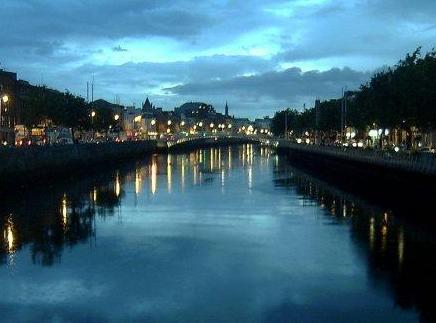

Minister Brennan seeks late nights out

29 January 2008

dublin_night.jpg

Speaking at the launch of IMMA’s new programme last Thursday (as reported in the Irish Times), Minister for the Arts Séamus Brennan called on Irish museums to extend their opening hours, in order to enhance access and respond to visitor demand:

“We need to get away from the traditional and often rigid nine-to-five opening times and build in a degree of flexibility that reflects our changed lifestyles and use of leisure time.”

Certainly nothing new here to anyone who’s ever tried to navigate the bizarre opening policies of many of the national institutions, and early closing hours of many cultural resources throughout the country– something Culture Night in Dublin has tried to rectify, with an amazing public response and success. The new Science Gallery may be on to something here, with opening hours until 8.30 during its upcoming festival.

If you open, they will come, seems to be the message…


New Science Gallery launches with ‘Lightwave’ festival

28 January 2008

lightwave.gif

The long-anticipated new Science Gallery at Trinity College Dublin will be launching in early February with the fantastic programme Lightwave (click here to download a programme pdf), running from 2-9 February. The festival offers a wide range of exhibitions and event on the theme of light, blurring the boundaries of science and art. Offerings include a fashion show, interactive games, films, a Volkswagon beetle covered with thousands of lights that will be patrolling Dublin city centre, and other happenings.. too many to list here! DO check out the schedule– this is something very unique that hasn’t been done in Ireland before, and it’s sure to be fantastic!


Mary Mac and Simon Wiesenthal Center spar over Nazi claims

23 January 2008

hunt-museum2.jpg

During a visit on Monday to the Hunt Museum in Limerick, President Mary MacAleese criticised claims made by the Simon Wiesenthal Center concerning the provenance of the collection, and the description of the late Hunts as “notorious dealers in art looted by the Nazis”. Today the Irish Times reported on the SWC’s response to the president:

President Mary McAleese has been criticised by the Simon Wiesenthal Centre (SWC) for censuring it over allegations it made about the Hunt Museum. The centre said it would be publishing a report in five or six weeks’ time which would vindicate its stance on the issue.

The centre’s European director, Dr Shimon Samuels, said he was “quite shocked” at Mrs McAleese’s remarks, which were uncalled for and were “not very presidential and were very unstatesmanlike”.

(…)

Mrs McAleese said the allegations were “baseless . . . unfounded . . . a tissue of lies” and had hurt many people.

Last October, an independent report by Lynn Nicholas, a world authority on Nazi looted art, found that “the presently available information and research provides no proof whatsoever that the Hunts were Nazis, that they were involved in any kind of espionage, or that they were traffickers in looted art”. (more…)

UPDATE: Fintan O’Toole gives the President an earful on the issue in Saturday’s Irish Times


Alumni News: Kevin O’Dwyer Naughton Institute commission

23 January 2008

odwyer_naughton.jpg

Kevin is a sculptor, silversmith and recent graduate of the MA in Cultural Policy programme, and has recently completed a commission to mark the official opening of the Naughton Institute. For more information on the piece click below– and congrats Kevin on this achievement!

Read the rest of this entry »


Post-(art)war

20 January 2008

piss_christ.jpgThe ‘arms-length’ principle underpinning the Irish Arts Council is often subjected to a healthy dose of skepticism– nevertheless few public arts policy bodies have endured the heat of political scrutiny quite like the U.S. National Endowment of the Arts. Michael J. Lewis’ perceptive recent article in Commentary Magazine charts the decline of the NEA into the risk-averse and toothless grant-making organisation it’s largely become:

In brief, the NEA has withered in a matter of decades from a self-styled instrument of world peace to a cautious dispenser of largesse whose one inflexible principle is that no grant must ever redound to the administration’s embarrassment. Whether it can regain its early ambition—or whether it should try to—is an open question.

War-scarred with charges of obscenity and wastefulnes, the NEA now toes a pretty timid line on a tiny budget. Is there any hope of resurrecting the NEA into a force for progressive national arts policy? (more…)


Colbert joins hallowed hall of U.S. presidents

17 January 2008

colbert_small.jpg

Fresh from the AP wire: Stephen Colbert, thwarted presidential contender and pundit-in-chief at the Colbert Report (and ex-Daily Show correspondent), has convinced the National Portrait Gallery in Washington D.C. to temporarily display his portrait ‘in what the museum considers an “appropriate place” — right between the bathrooms near the “America’s Presidents” exhibit’:

After the work was rejected by the National Museum of American History, Colbert eventually made his way to the portrait gallery. Bentley said Colbert wasn’t begging so much as “making his case.” She said they welcome the conversation about whose portraits are included in the gallery’s collection. It was just not Colbert’s time, she said.

“Who’s the competition? Who do I need to knock out of here to get me up?” Colbert asked gallery director Marc Pachter.

Colbert argued he was more deserving than athletes Lance Armstrong or Andre Agassi and pulled out his Hacky Sack for a few kicks in the art gallery to prove it. “You do realize I’m in big trouble if you hit any of these portraits,” Pachter said.

Still, Colbert said he thinks his “sack work” ultimately won Pachter over for the temporary display.

In this season of American electioneering and political bickering, it’s nice to see the Smithsonian taking a stand for freedom.


Training event: ‘Volunteer Focus- A Volunteer Manager’s Seminar Series’

17 January 2008

The Professional Association of Volunteer Managers Ireland (PAVMI) in association with Volunteering Ireland will be hosting a seminar series for all those involved with Volunteer Management and/or Coordination, on the 4th of February and 13th of March:

volunteer_focus.jpg


Backlash against British Council

16 January 2008

hirst.jpg

Over 100 artists and arts professionals (including Damien Hirst, Tracy Emin, Nick Serota, David Hockney, Gilbert & George, etc) have signed a letter in protest over the apparent restructuring of the British Council’s arts programme, published recently in the Guardian. According to the accompanying article:

What is known is that the British Council is planning a radical shakeup in the way it delivers arts abroad, and part of that will entail scrapping its long-established arts departments, including visual arts, theatre, film and dance.

(see also the BBC‘s reporting of the controversy)

Meanwhile the British Council’s chief executive Martin Davidson has insisted in a statement that ‘the British Council remains deeply committed to the arts in all its forms. But like any organisation, we need to review our focus from time to time, and we are initiating such a consultation on the council’s arts strategy this month.’

It’s not yet clear what the restructuring will entail, but the claimed ‘consultation’ seems to be an exercise in optics rather than a true dialogue, as subsequent letters to the Guardian on the issue seem to indicate.

It’s been a tough week for the arts in Britain– in response to the recent major cuts by the ACE (as noted in a previous post) a number of theatres and orchestras in the UK are preparing to sue the Council for their loss of income. As Mark Brown of the Guardian observed:

… the artists are in revolt. The actors’ union, Equity, passed a vote of no confidence in Arts Council England, although it is implementing a much bigger than expected spending round. But while it is increasing money to three-quarters of its 990 regularly funded organisations, it is also cutting it for 194 of them. Sometimes the Arts Council must take tough decisions to allow innovative groups more money and refresh the pot with new organisations. But the actors believe theatre is taking too big a hit. Now the painters and sculptors are flexing their muscle against the British Council. What should have been a week for forward-looking debate on the arts has ended in acrimony and a breakdown in trust between artists and arts managers.


Innovation and the Irish museum

15 January 2008

natmuseum.jpg

The weekend Irish Times carried an interesting article by Brian O’Connell on the slow pace of innovation at Irish museums– perhaps not a surprising conclusion to anyone who’s crossed their thresholds recently. With the Galway City Museum singled out for particular criticism, the article finds that despite some improvements, Irish museums lag pretty far behind their American and British cousins:

So, how do Ireland’s institutions compare with their international counterparts? Academic Pat Cooke admits there are challenges for Ireland’s museums, but says that some have already been quick to adapt and innovate in line with visitor expectations. “In general, the changes required have to do with museums consulting better with the public, finding out what people are genuinely interested in and putting on exhibitions that mean something to people,” he says.

Cooke highlights the Foynes Flying Boat Museum and the GAA Museum at Croke Park as examples of how Ireland’s museum sector has got it right. Others, he feels, are still too loyal to their archeological collections – with case after case of axes and flintheads doing little to inspire a new generation of visitors.

“The archeological mindset is the hardest one to crack,” says Cooke. “Like it or not, 90 per cent of people couldn’t care less about axeheads. Museums need other types of mindsets, other than purely archeological, to enable people connect on various levels.”

Lack of funding, of course, is the perennial scapegoat– yet it’s questionable whether such stagnation is solely the consequence of small budgets. Though it may be a controversial assertion, the leadership of our national institutions is not what it could be: saddled with a bureaucratic legacy and offering little in the way of fresh leadership perspectives, our museums have been sluggish in adopting new technologies and approaches now commonplace at other institutions. One look at the websites of the national institutions is very revealing… Flash? Podcasts? Interactivity? The room for improvement is tremendous…


Annaghmakerrig gets wired: ArtLog at the Tyrone Guthrie Centre

11 January 2008

guthriecentre.jpg

The Irish Times reports today on an unusual new initiative to be launched at the Tyrone Guthrie Centre in Annaghmakerrig, Co. Monagahan. ‘ArtLog’– developed at the Digital Media Centre at Dublin Institute of Technology–has been designed to record information about artists who visit the retreat centre, forming a kind of ‘personal archive’ of their activity during their stay.

Every artist who checks in at the centre will be asked to supply basic biographical information for the central database. After that, participation in the digital archive will be optional – artists who elect to participate will also be able to choose whether to record their thoughts, ideas and methodology in a blog-style journal, an audio recording or a video diary.

Director Pat Donlon views the project as simply an updated version of the artist’s note or sketchbook– another means of capturing what is otherwise often ephemeral material:

“This is the age of the finished product,” she says. “We see paintings appear in galleries as if they just leapt on to the canvas fully formed; books appear, but the author’s draft versions of the manuscripts simply disappear. It’s becoming more and more difficult to capture the process of creativity. Nobody writes letters any more. They write e-mails, but nobody archives their e-mails. What will be left for scholars who come along in 20, 23, 40 years time, wanting to inquire into the thought processes of a particular writer or visual artist? Nothing.”

“You know how upset we get when somebody close to us loses their memory, gets Alzheimer’s? The pain and grief around that is enormous,” she says. “Well, we’re talking about our cultural memory here. If Irish art is a mosaic of little pieces, we have to keep all those pieces. And the tiny pieces are as important as the big ones because they hold the whole thing together.”

Sounds intriguing, but I’m less convinced by the argument that artists’ processes are less documented today than they have been in the past! If anything, we live in an age of paranoia about the loss of memory and information, paradoxically at a time when more of it is available than ever before. In any case it will interesting to see whether the new technology is taken up by the Centre’s resident artists and writers, and if anything useful will emerge.


O Director Where Art Thou?

11 January 2008

The arts wires are buzzing with speculation on who will succeed the directorship of the Metropolitan Museum of Art… The Wall Street Journal carried an interesting article on the unusually high number of U.S. museums currently hunting directors (21), and the seismic shift in the role of the position since de Montebello took up his post in 1977. According to the WSJ:

Mr. Montebello’s decision comes at a time when the once-tweedy position of museum director is growing increasingly complicated. The industry as a whole is grappling with reduced federal and corporate funding of the arts, along with several years of flat attendance.

Museum directors have responded by boosting their fund-raising efforts and adding a slew of audience-friendly offerings like museum cafés, gift shops and curator-led vacations. But museum experts say the daunting job description — a mix of executive, lawyer and diplomat — has spooked some curators from signing up to direct; others have left for higher-paying jobs at auction houses.

Still, with the current director salary at $4.7 million and the kudos that comes with heading up one of the world’s finest art museums, there’s bound to be some interest! More also on this from the New York Magazine and an opinion from the WSJ


End of a legacy

9 January 2008

monte190.jpgThe New York Times today announced the impending retirement of Philippe de Montebello from the directorship of the Metropolitan Museum of Art, a post he’s held to great acclaim for over thirty years:

A patrician figure whose mellifluous multilingual voice on the museum’s audio guides is known to millions of visitors around the world, he is the eighth and longest-serving director in the institution’s 138-year history.

Mr. de Montebello, 71, has more than doubled the museum’s physical size during his tenure, carving out majestic new galleries suited to the Met’s encyclopedic holdings. Today it is the city’s biggest tourist attraction, with millions of visitors a year.

In its own way, his retirement marks the end of an era in the art museum world, where the aristocratic image of a museum director has become somewhat of an anachronism. As an intern at the Met a decade ago I met de Montebello, and recall the odd contrast between the interns’ casual (even grubby) cheerfulness and the director’s rounded tones! Nevertheless, not all is change within the museum world: it’s striking to note the complete absence of women in the NY Times’ list of possible successors to de Montebello, especially given the extreme gender imbalance in most art history and arts management university programmes today…


A new paradigm for donating art?

8 January 2008

broad190.jpgThe Los Angeles County Museum of Art is putting a brave face on what must be a crushing blow for their acquisition hopes:

Eli Broad, the billionaire financier and philanthropist whose private collection of some 2,000 works of Modern and contemporary art is one of the most sought-after by museums nationwide, has decided to retain permanent control of his works in an independent foundation that makes loans to museums rather than give any of the art away. (more…)

Increasingly major art collectors seem dissatisfied with the restrictions and limitations slapped on to works once they’ve been given to museums, particularly the inability of museums to exhibit only a fraction of the works in their collection. The solution? Start your own museum, or in Broad’s case, devise an alternative model. From Broad’s point of view, the move ensures maximum exposure for his carefully assembled collection, as the foundation will be able to make loans to other institutions more flexibly and frequently than any single museum would. Yet moving control of artworks from public institutions to private foundations potentially carries serious long-term consequences, especially as the number of new privately-funded museums multiplies. One of the strengths of the museum setting is the ability to study and see works in context with one another, to create relationships through display and exhibition– goals that can also be reached through Broad’s model, but one wonders about the fundamental distance (practical and in principle) between works held in the public trust and those which remain stubbornly part of a single individual’s legacy…

Update: Read on for reaction from Christopher Knight in the Los Angeles Times, whose opinion on the move is summarised by his quote from Richard Lacayo’s Time Magazine blog: “LACMA got screwed.”


Follow

Get every new post delivered to your Inbox.

Join 1,014 other followers